
Brick spalling is one of the most common masonry problems Toronto homeowners notice on older brick homes.
At first, it may look like a few rough spots, chips, flakes, or small pieces of brick breaking away. But over time, spalling can spread, weaken the face of the brick, expose softer inner material, and allow more water into the wall.
In Toronto, this problem is especially common because our homes deal with wet weather, snow, ice, road salt, and repeated freeze-thaw cycles. Once moisture gets into damaged brick or mortar, winter does the rest. Water freezes, expands, pushes against the brick, and slowly breaks the surface apart.
That is why spalling brick should not be ignored.
What Is Brick Spalling?
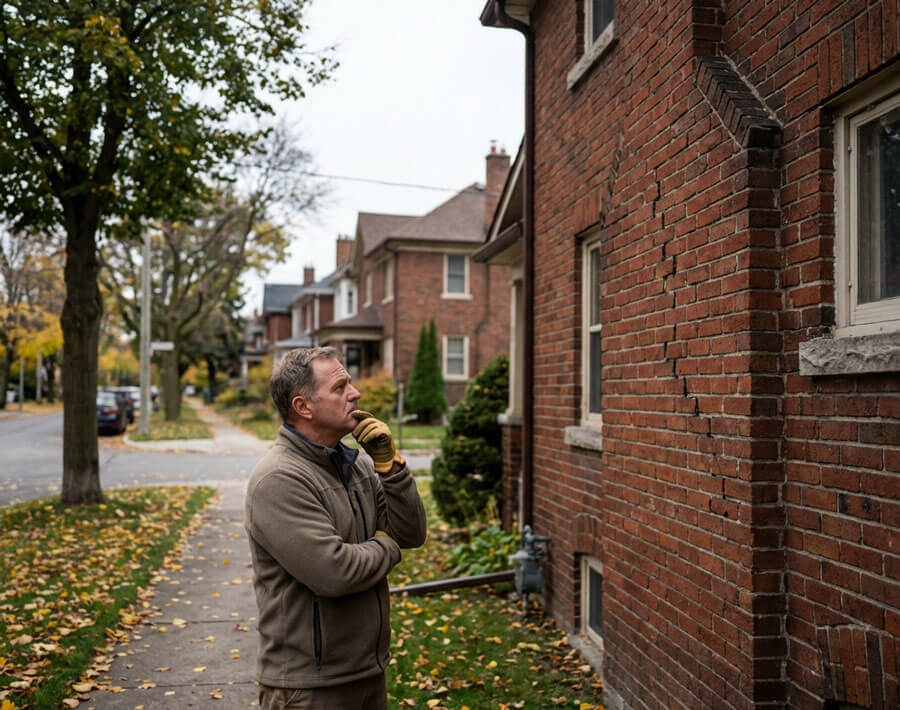
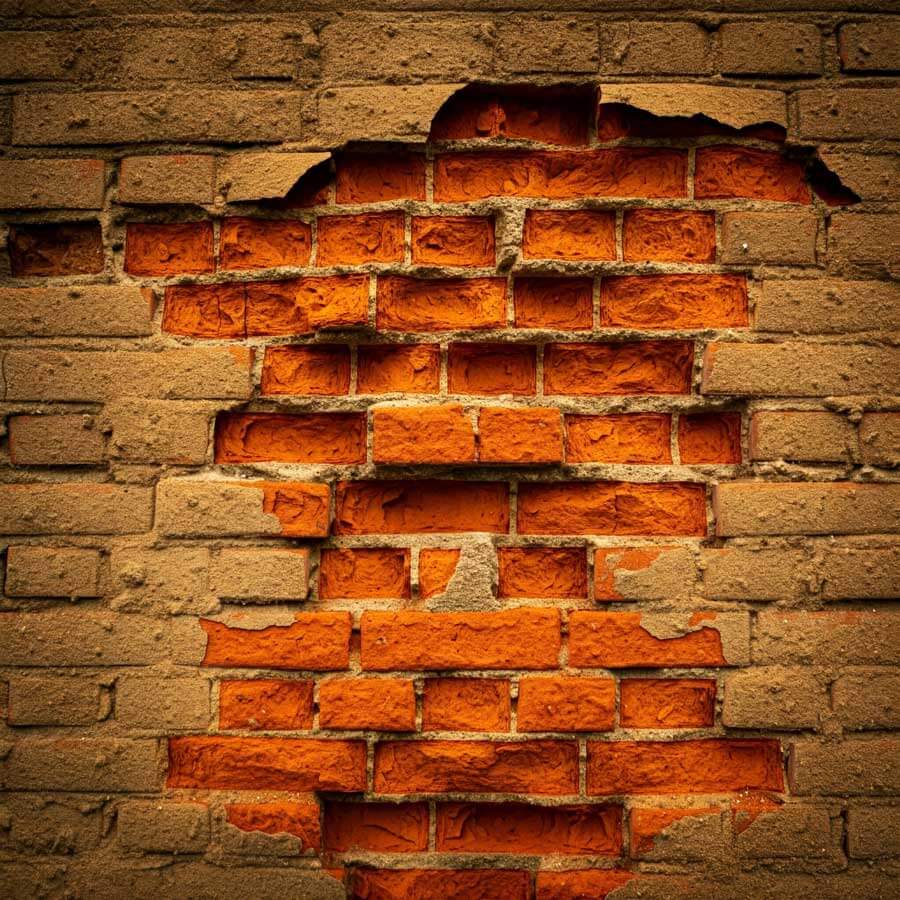
Brick spalling happens when the outer face of a brick starts to break, flake, chip, crumble, or fall away.
You may notice:
- Brick faces popping off
- Flaking or peeling brick surfaces
- Crumbling red dust below the wall
- Soft or powdery brick
- Uneven patches on the exterior wall
- Damaged brick around chimneys, sills, steps, porches, or lower walls
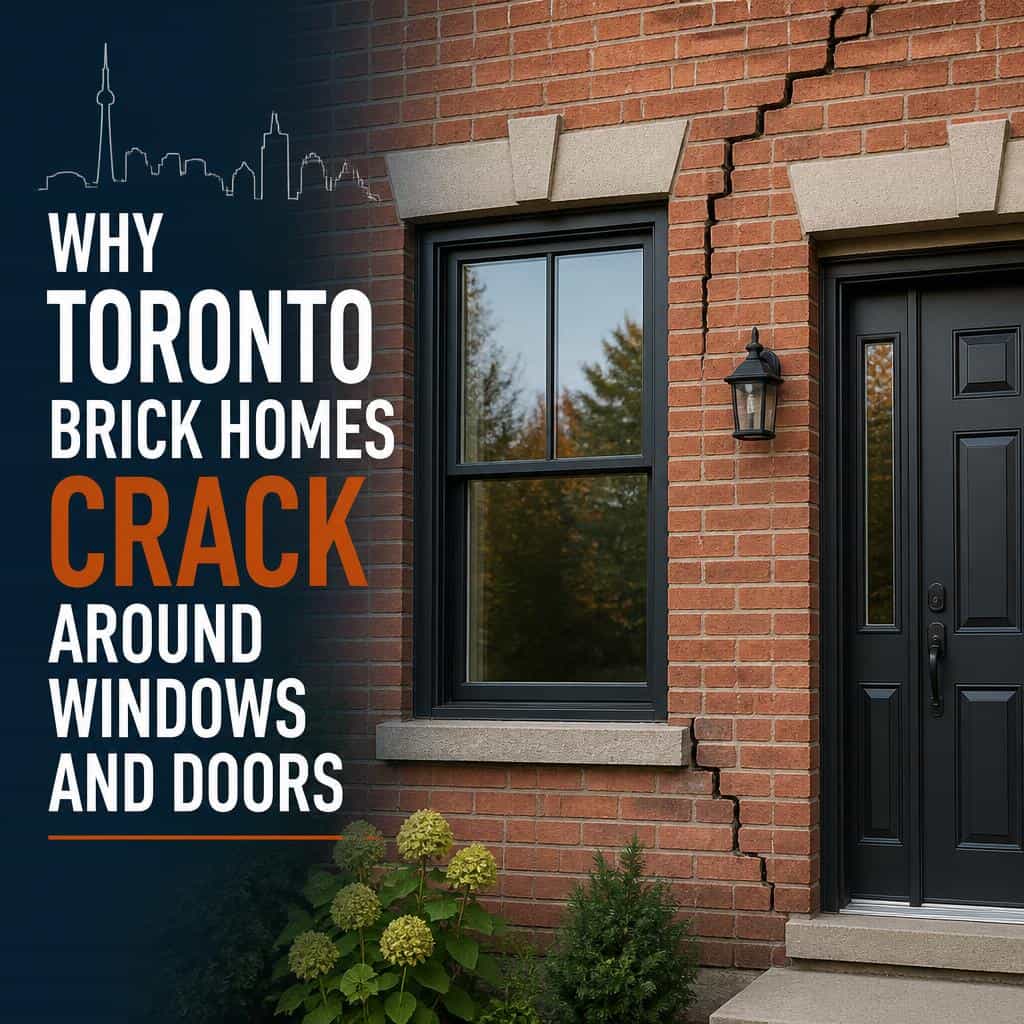
- Mortar joints that are cracked, open, or missing
Spalling is not just cosmetic. Once the protective face of the brick is gone, the brick becomes more vulnerable to moisture, frost, and further deterioration.
Why Brick Spalling Is So Common in Toronto
Toronto is tough on masonry.
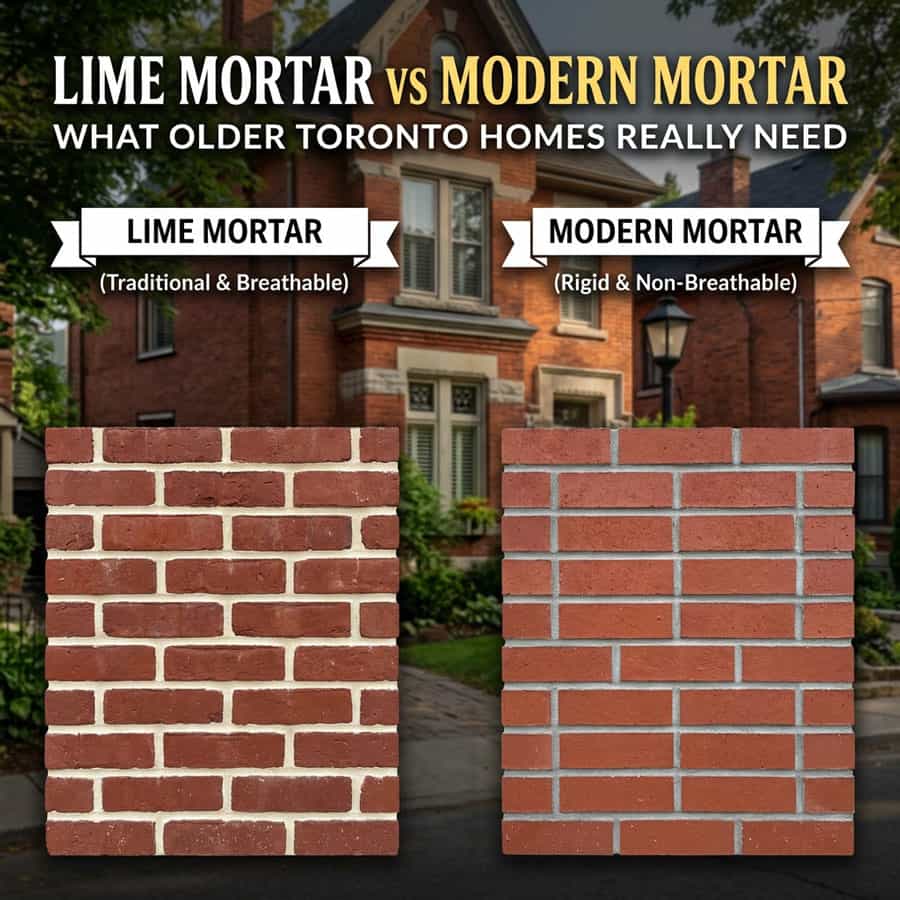
Older brick homes across the city were built with materials designed to breathe. Many of these homes have stood for decades because the brick and mortar were able to absorb and release moisture naturally.
Problems often start when moisture gets trapped inside the wall or when past repairs were done with the wrong materials.
Common causes include:
- Freeze-thaw damage
- Poor drainage
- Failed mortar joints
- Hard cement mortar used on older soft brick
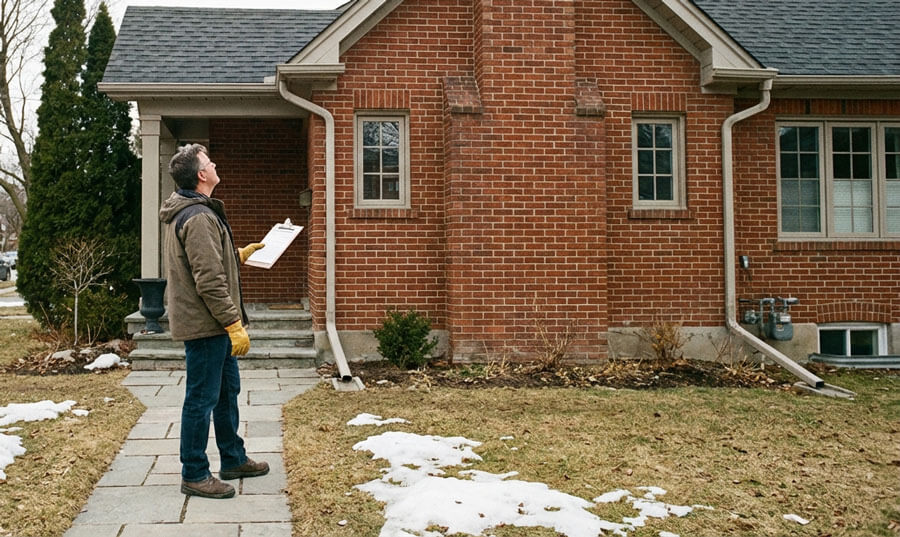
- Leaking eavestroughs or downspouts
- Water running down the wall
- Damaged chimney caps or crowns
- Salt exposure near driveways, steps, and walkways
- Painted brick trapping moisture
- Previous patchwork repairs that did not match the original masonry
Toronto homes are not fragile. But masonry needs to work as a system. When water cannot escape properly, brick starts to pay the price.
Freeze-Thaw Damage: The Main Culprit
The biggest reason brick spalls in Toronto is freeze-thaw movement.
Here is the simple version.
Water gets into the brick or mortar. Temperatures drop. The water freezes and expands. That expansion puts pressure on the brick from the inside. Over time, the surface begins to crack, chip, or break away.
Then more water gets in.
Then more freezing happens.
Then more brick fails.
It is a slow cycle, but once it starts, it rarely fixes itself. That is the part some homeowners miss. Brick spalling usually gets worse, not better.
Where Spalling Usually Shows Up First
Spalling often appears in areas that get the most moisture exposure.
Common problem areas include:
Chimneys
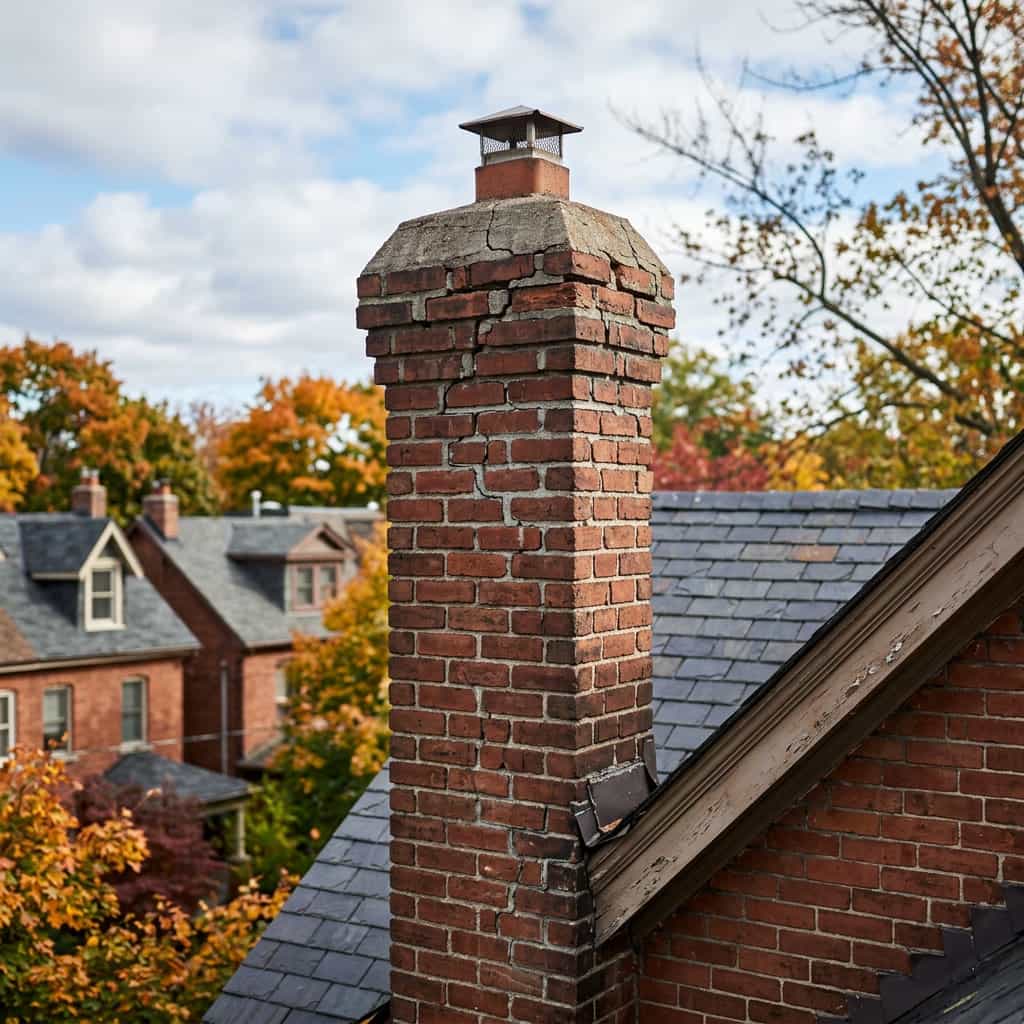
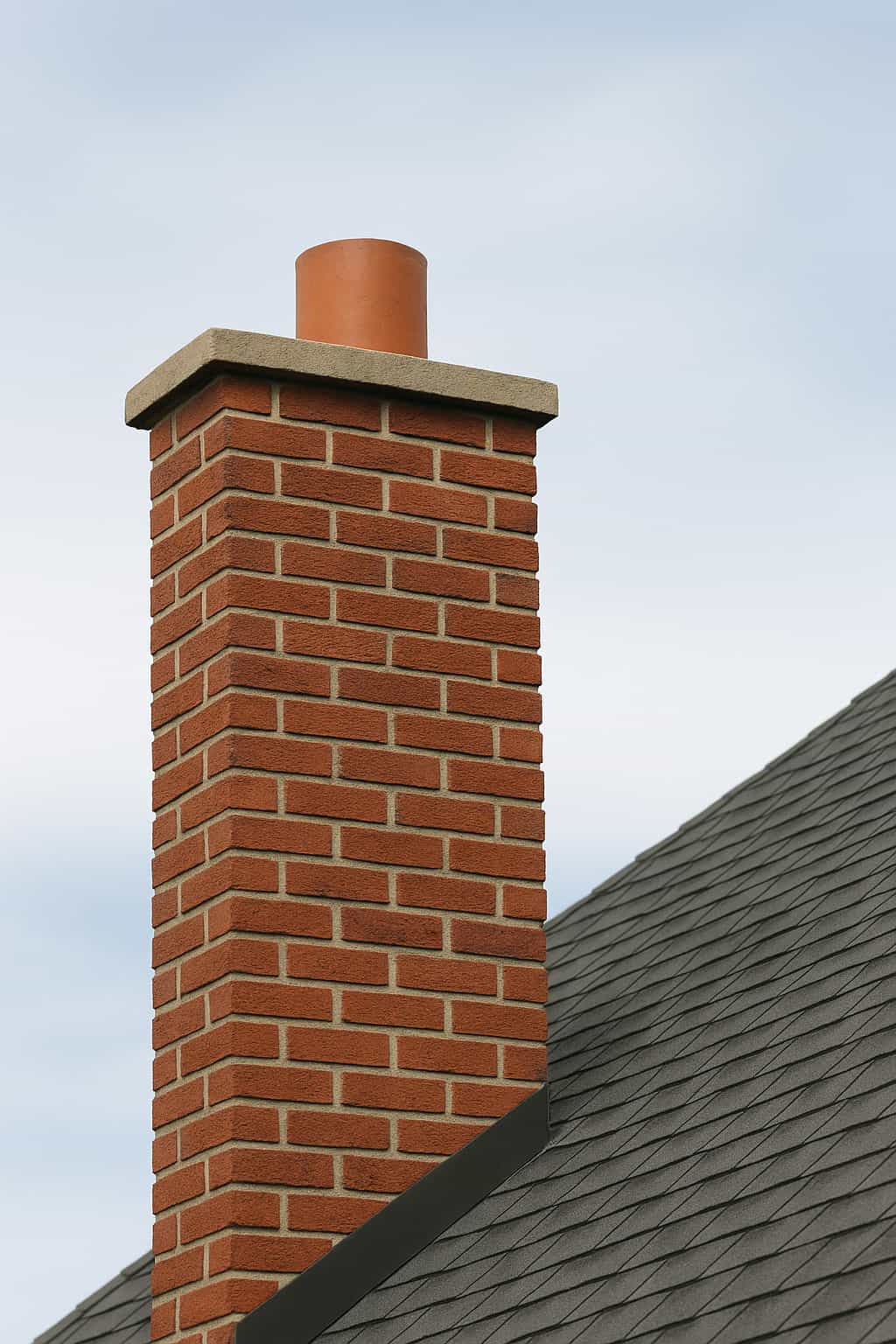
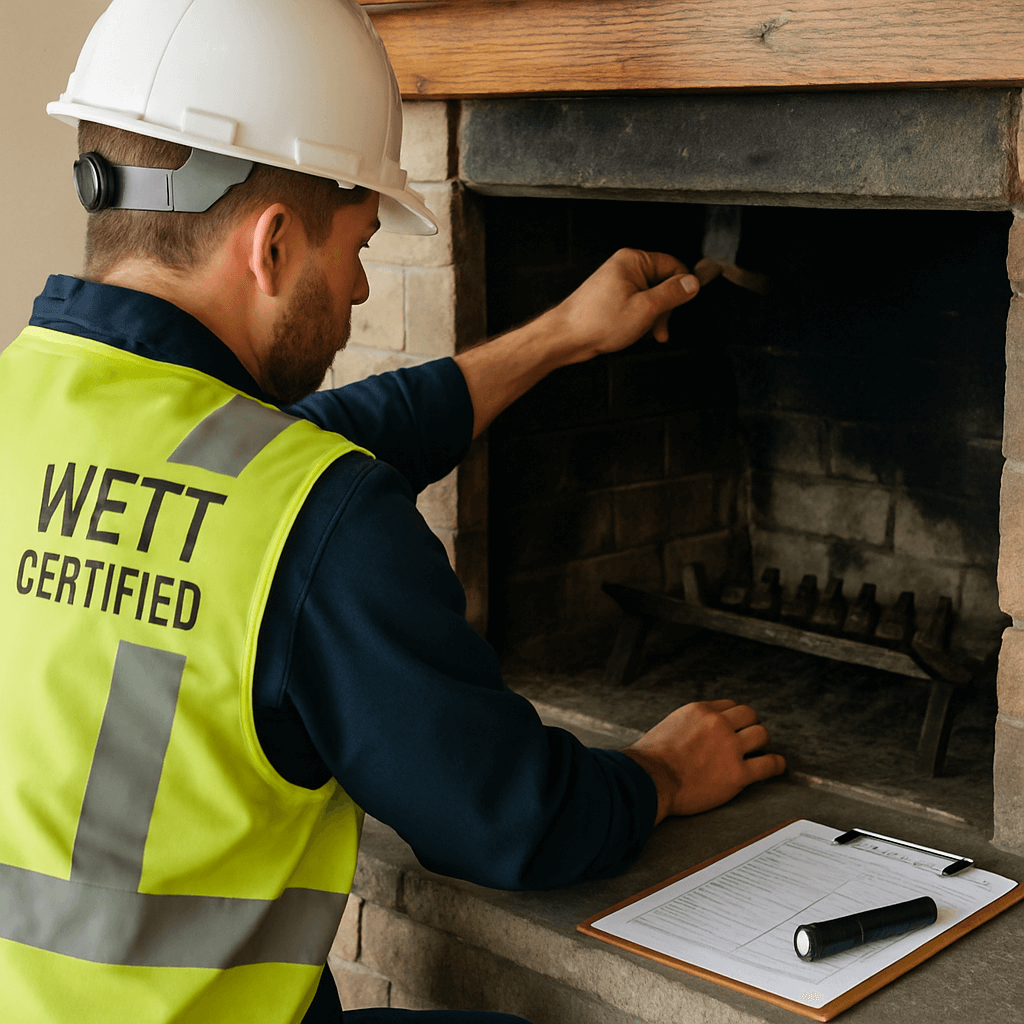
Chimneys take a beating from rain, snow, wind, ice, and temperature swings. Because they are exposed on all sides, chimney brick often deteriorates faster than wall brick.
Window Sills and Ledges
Stone and brick sills are supposed to direct water away from the wall. When sills crack, slope incorrectly, or fail, water can run back into the brick below.
Lower Brick Walls
The lower part of a brick wall is often exposed to splashback from rain, snow buildup, and salt from nearby walkways or driveways.
Steps, Porches, and Entry Areas
These areas see foot traffic, ice, salt, and standing moisture. If the brick or mortar is already weak, spalling can show up quickly.
Painted Brick Walls
Paint can trap moisture inside older brick, especially if the coating is not breathable. Once trapped moisture freezes, the brick face can start to fail.
Is Spalling Brick Dangerous?
A few damaged bricks may not mean the wall is structurally unsafe. But spalling should still be taken seriously.
Spalling can lead to:
- More water entering the wall
- Faster deterioration of nearby bricks
- Loose brick faces falling away
- Mortar failure
- Chimney instability
- Interior moisture issues
- Higher repair costs later
If spalling is isolated, the repair may be straightforward. If it has spread across a large section, the wall may need more extensive restoration.
The key is to catch it before a small masonry problem becomes a larger rebuilding project.
Can Spalling Brick Be Repaired?
Yes, but the right repair depends on how badly the brick has deteriorated.
A professional mason will usually look at:
- How many bricks are damaged
- Whether the brick is soft or crumbling
- Whether the mortar joints are failing
- Whether moisture is still getting into the wall
- Whether previous repairs caused the problem
- Whether the damaged brick needs replacement
- Whether repointing is also required
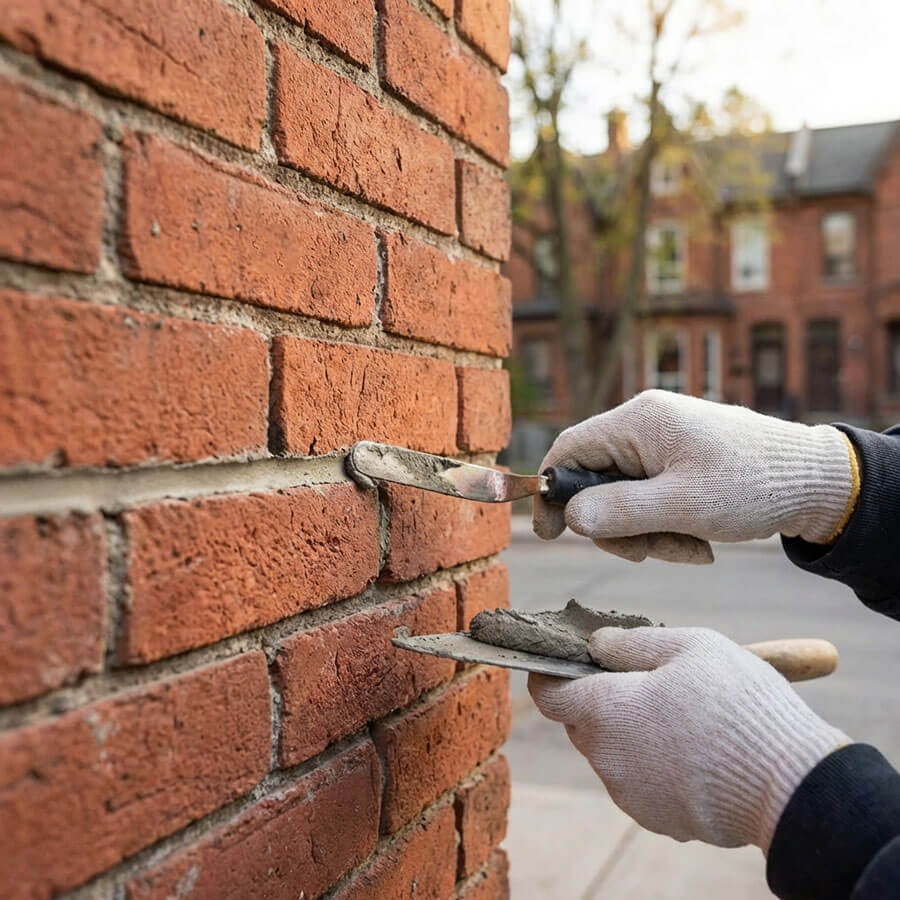
In many cases, badly spalled bricks need to be carefully removed and replaced with matching brick. If mortar joints are damaged, repointing may also be needed to stop more water from getting in.
Why Matching the Brick Matters
This is especially important on older Toronto homes.
Replacing damaged brick is not just about filling a hole in the wall. The new brick needs to work visually and physically with the existing masonry.
A poor brick match can leave your home looking patched. Worse, if the replacement brick or mortar is too hard, too dense, or incompatible with the original wall, it can create new problems later.
For older and heritage-style homes, matching the brick, mortar colour, joint style, texture, and overall appearance matters.
That is where experienced restoration masonry makes a major difference.
Should You Seal Spalling Brick?
This is where homeowners need to be careful.
A sealer may sound like a simple solution, but not every brick wall should be sealed. Some coatings can trap moisture inside the masonry, which may make freeze-thaw damage worse.
Before applying any type of masonry sealer, the source of the moisture problem should be identified. The damaged brick and mortar should also be repaired first.
Sealing over failing brick is like putting a raincoat over a wet sweater. It may look like protection, but the moisture is still trapped inside.
When to Call a Mason
You should have spalling brick looked at if you notice:
- Brick faces flaking or falling off
- Crumbling brick dust near the wall
- Open or missing mortar joints
- Water stains on brick
- Bulging or loose sections
- Damage near chimneys, sills, or steps
- Painted brick starting to peel or crack
- Repeated repairs that keep failing
The earlier the issue is inspected, the more options you usually have.
Brick Spalling Is a Warning Sign
Spalling brick is your home’s way of saying water is getting where it should not be.
Sometimes the solution is brick replacement. Sometimes it is repointing. Sometimes it involves fixing a chimney cap, sill, drainage issue, or previous repair. Most often, the best repair starts by understanding why the brick failed in the first place.
For Toronto homeowners, that matters.
A proper masonry repair should not just make the wall look better. It should help protect the wall from more moisture, more freeze-thaw damage, and more expensive repairs later.
Call to Action
If you have brick that is flaking, crumbling, or falling apart, Bowman Masonry can inspect the damage and recommend the right repair approach for your home.
From brick replacement and repointing to chimney repairs and older home restoration, Bowman Masonry helps Toronto and GTA homeowners protect the brickwork that gives their homes character, strength, and lasting value.
Contact Bowman Masonry today to request an estimate.
FAQ Section
What causes brick spalling in Toronto homes?
Brick spalling is most often caused by moisture entering the brick and freezing during cold weather. When water freezes, it expands and can break the face of the brick apart. Poor drainage, damaged mortar, leaking chimneys, salt, and trapped moisture can all make the problem worse.
Can spalling brick be repaired?
Yes. If the damage is limited, individual spalled bricks can often be removed and replaced. If the mortar joints are also failing, repointing may be needed to help stop water from entering the wall.
Is spalling brick only a cosmetic problem?
No. While spalling does affect the appearance of the brick, it can also allow more moisture into the wall and lead to further deterioration. If left untreated, the damage can spread.
Should I seal spalling brick?
Not before the cause of the problem is understood. Some sealers can trap moisture inside older brick, which may make freeze-thaw damage worse. Damaged brick and mortar should be properly repaired first.
Why does spalling often happen on chimneys?
Chimneys are exposed to weather from all sides. Rain, snow, ice, wind, and freeze-thaw cycles can wear down chimney brick and mortar faster than other areas of the home.