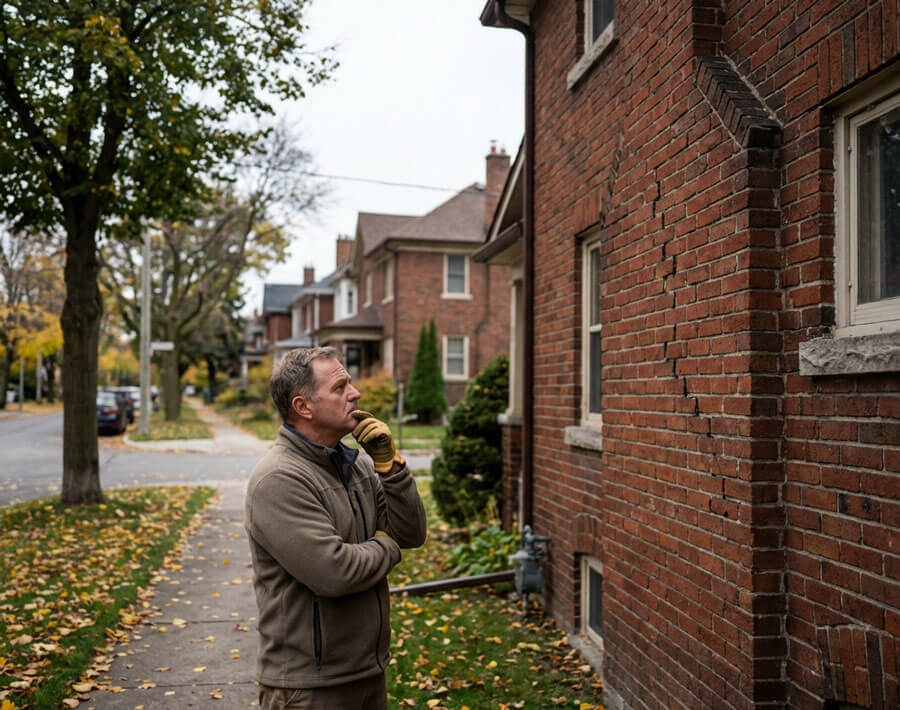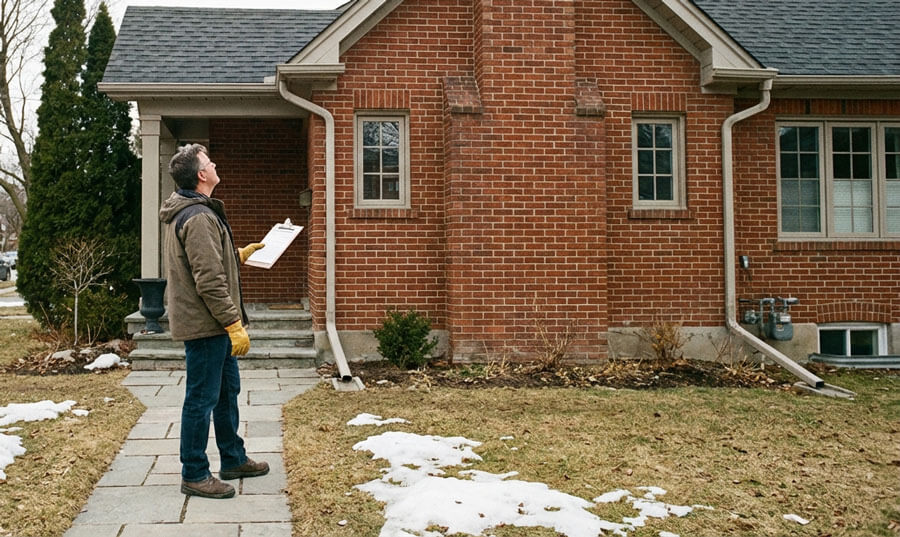

A damaged chimney is one of those home problems that is easy to ignore — until it suddenly is not.
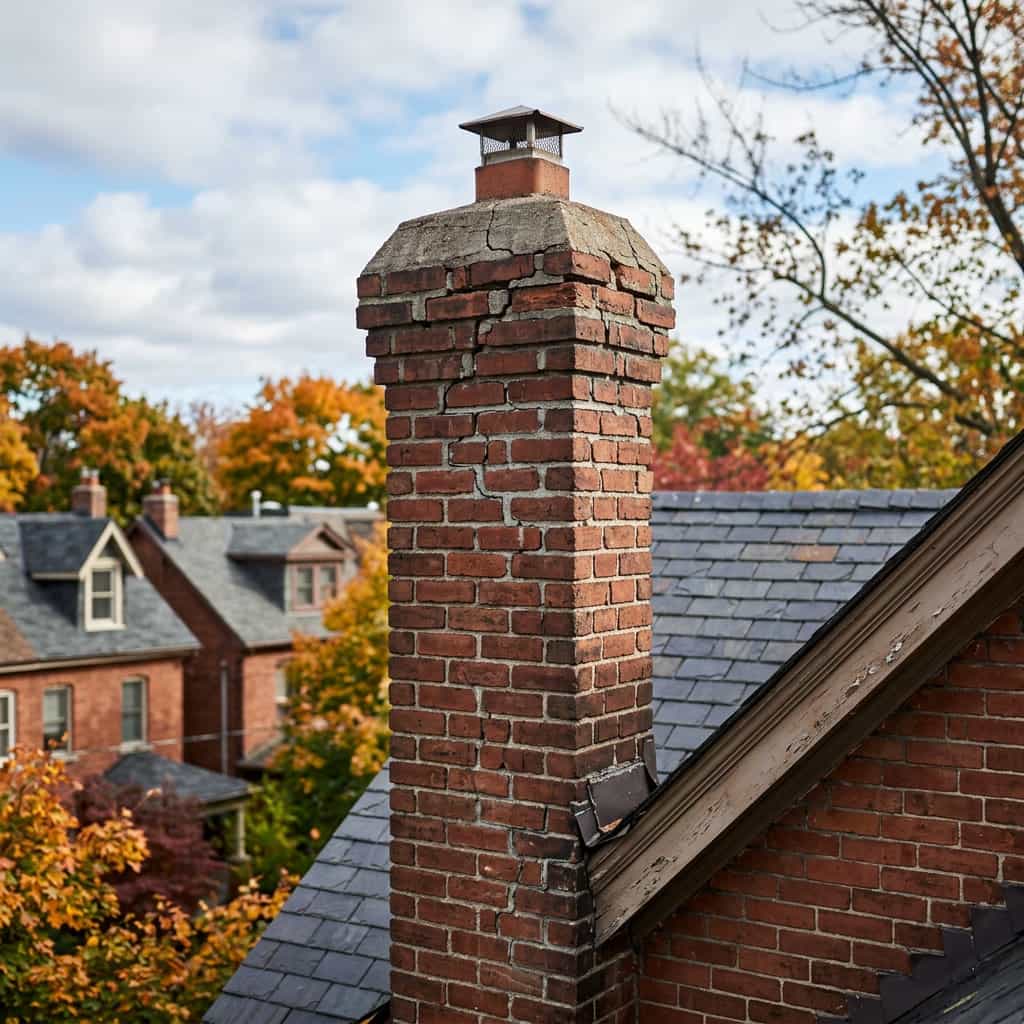
At first, you may notice a few cracked bricks, loose mortar, white staining, or pieces of brick falling near the roofline. Maybe the chimney looks slightly crooked. Maybe the top is crumbling. Maybe water is getting into the home around the fireplace or ceiling.
The big question is usually this:
Does the chimney need a repair, a rebuild, or complete removal?
The answer depends on the condition of the brick, mortar, chimney crown, flashing, flue, and the overall stability of the structure.
For Toronto homeowners, chimney problems are especially common because masonry chimneys take a beating from freeze-thaw cycles, snow, ice, wind, rain, and years of moisture exposure. Since chimneys are exposed on all sides, they often deteriorate faster than the brick walls below.
Why Chimneys Fail Faster Than Other Masonry
Chimneys live a rough life.
Unlike the walls of your home, a chimney is fully exposed to weather. It has no roof over it, no warm interior wall protecting it, and often very little shelter from wind, rain, ice, and snow.
That makes chimneys especially vulnerable to:
- Freeze-thaw damage
- Cracked mortar joints
- Spalling brick
- Loose or missing bricks
- Rusted flashing
- Cracked chimney crowns
- Water entering the flue
- Poor previous repairs
- Leaning or shifting masonry
- Damage from animals or vegetation
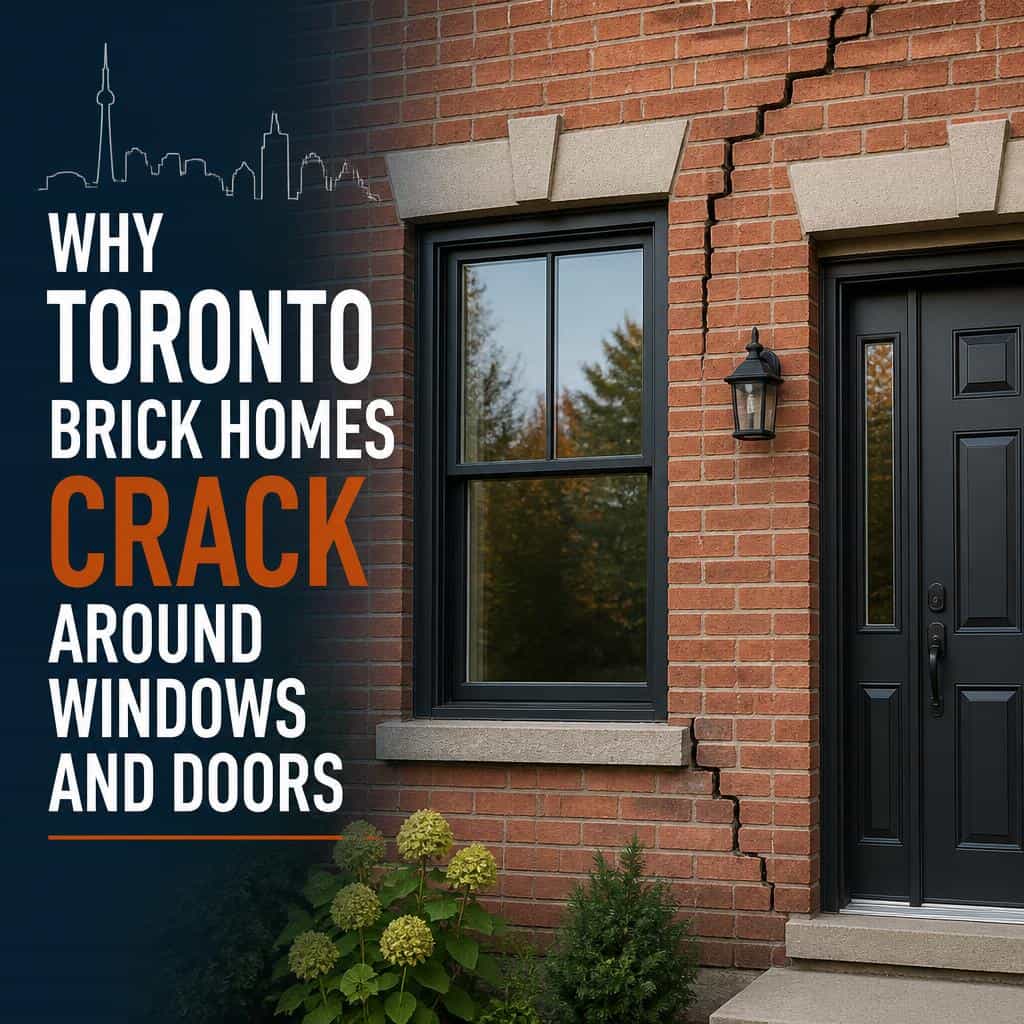
In Toronto, winter is usually the villain. Moisture gets into small cracks, freezes, expands, and slowly breaks the masonry apart. A tiny crack can become a serious chimney problem after enough winters.
Chimneys do not get the easy life. They are basically standing on the roof taking punches for the whole house.
Signs Your Chimney May Need Repair
Not every chimney problem means the whole structure has to come down. Many chimney issues can be repaired if they are caught early.
Your chimney may need repair if you notice:
- Cracked mortar joints
- Small areas of missing mortar
- Minor brick damage
- A cracked or deteriorated chimney crown
- Loose chimney cap
- Minor water staining
- Isolated spalling brick
- Minor flashing issues
- Small cracks near the top courses
- Early signs of weathering
In these cases, the chimney may still be structurally sound. The repair may involve repointing, replacing a few damaged bricks, repairing the chimney crown, improving the cap, or addressing water entry.
The key is timing. A repair is much easier before water has had years to work its way into the masonry.
What Chimney Repointing Does
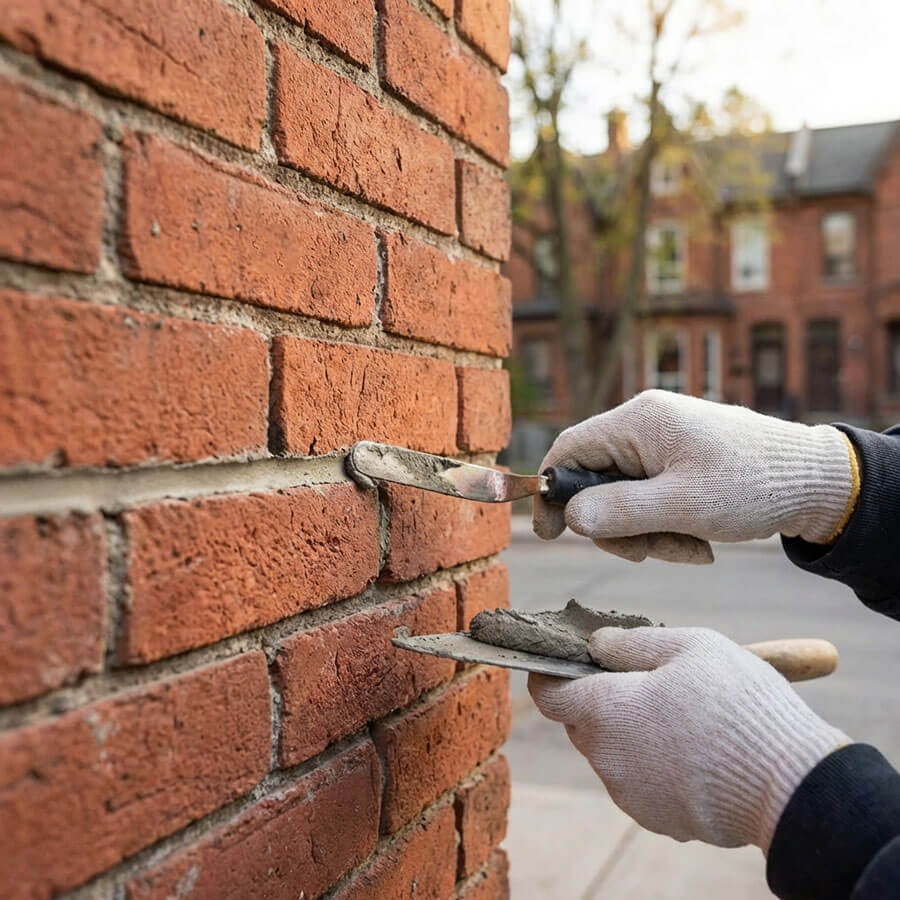
Repointing is one of the most common chimney repairs.
It involves removing deteriorated mortar from between the bricks and replacing it with new mortar that is suitable for the existing masonry.
Chimney repointing may be needed when:
- Mortar joints are cracked
- Mortar is crumbling or falling out
- Joints are deeply recessed
- Water is entering through open joints
- Bricks are still mostly solid
- The chimney is stable but weathered
Repointing helps protect the chimney by closing open joints and reducing water entry.
However, repointing only works if the bricks are still in good condition. If the bricks themselves are badly spalled, loose, or crumbling, brick replacement or rebuilding may be needed.
Signs Your Chimney May Need Partial Rebuilding
Sometimes the lower portion of the chimney is still stable, but the upper section has deteriorated badly.
This is common because the top of the chimney gets the most exposure.
A partial chimney rebuild may be needed if you notice:
- Several courses of loose brick near the top
- Severe mortar deterioration
- Multiple spalled bricks
- A failing chimney crown
- Brick faces popping off
- The chimney top looks uneven or unstable
- The cap or crown has failed and allowed water in
- Previous patch repairs are falling apart
In this case, a mason may remove the damaged upper portion of the chimney and rebuild it using suitable brick and mortar.
This can restore the chimney without removing the entire structure.
Signs Your Chimney May Need a Full Rebuild
A full chimney rebuild is more serious and may be needed when damage extends beyond the top section.
Your chimney may need a full rebuild if:
- The chimney is leaning
- The structure is visibly unstable
- Large sections of brick are loose
- Mortar is failing throughout the chimney
- The chimney has separated from the house
- There are major cracks running vertically
- The flue or interior structure is compromised
- Previous repairs have failed repeatedly
- Water damage is widespread
- The chimney is unsafe above the roofline
A full rebuild usually involves dismantling the damaged chimney and rebuilding it from a sound point, often from the roofline or lower depending on the condition.
This is not a cosmetic repair. It is a structural masonry repair.
When Chimney Removal May Make Sense
Not every chimney needs to be rebuilt.
In some cases, chimney removal may be the better option, especially if the chimney is no longer used.
Chimney removal may make sense when:
- The fireplace is no longer functional
- The chimney is unused
- The chimney is severely deteriorated
- Rebuilding would not provide practical value
- The chimney is causing repeated leaks
- The chimney is unsafe
- The homeowner wants to eliminate future maintenance
- The structure is no longer connected to an active heating system
Removal is not the same as knocking bricks off the roof and hoping for the best. A chimney must be removed carefully, and the roof, wall, flashing, and surrounding structure need to be properly repaired after removal.
If the chimney runs through the interior of the home, removal may be more involved. Sometimes only the exterior stack above the roofline is removed. Other times, more of the chimney structure may need to be addressed.
Repair vs Rebuild vs Removal: The Simple Difference
Here is the homeowner version:
Repair is usually best when the chimney is mostly sound, but has localized mortar, brick, crown, cap, or flashing issues.
Partial rebuild is usually needed when the upper section of the chimney is badly damaged, but the lower structure is still stable.
Full rebuild may be needed when the chimney has widespread damage, leaning, structural movement, or serious deterioration.
Removal may make sense when the chimney is unused, unsafe, severely deteriorated, or no longer worth rebuilding.
The right choice depends on condition, safety, usage, cost, and long-term value.
Do Not Ignore a Leaning Chimney
A leaning chimney should always be taken seriously.
A chimney may lean because of:
- Foundation movement
- Failed mortar
- Structural separation
- Long-term water damage
- Poor construction
- Previous improper repairs
- Deterioration at the roofline
- Freeze-thaw movement
If a chimney is leaning or pulling away from the home, it may be unstable. This should be inspected promptly.
A leaning chimney is not the place for “let’s see what happens.” What happens is usually gravity. Gravity has a perfect record.
Watch for Water Damage
Water is one of the biggest causes of chimney failure.
Signs of chimney-related water problems may include:
- Water stains near the fireplace
- Damp odours
- White staining on exterior brick
- Rust on fireplace components
- Peeling paint near the chimney breast
- Ceiling stains near the chimney
- Crumbling mortar
- Moss or vegetation growth
- Damaged flashing
- Cracked chimney crown
Water can enter through the crown, cap, flashing, mortar joints, or damaged brick. Once inside, it can cause both exterior and interior damage.
A proper chimney assessment should look for where the water is getting in, not just where the damage appears.
The Role of the Chimney Crown and Cap
The chimney crown and cap help protect the chimney from water.
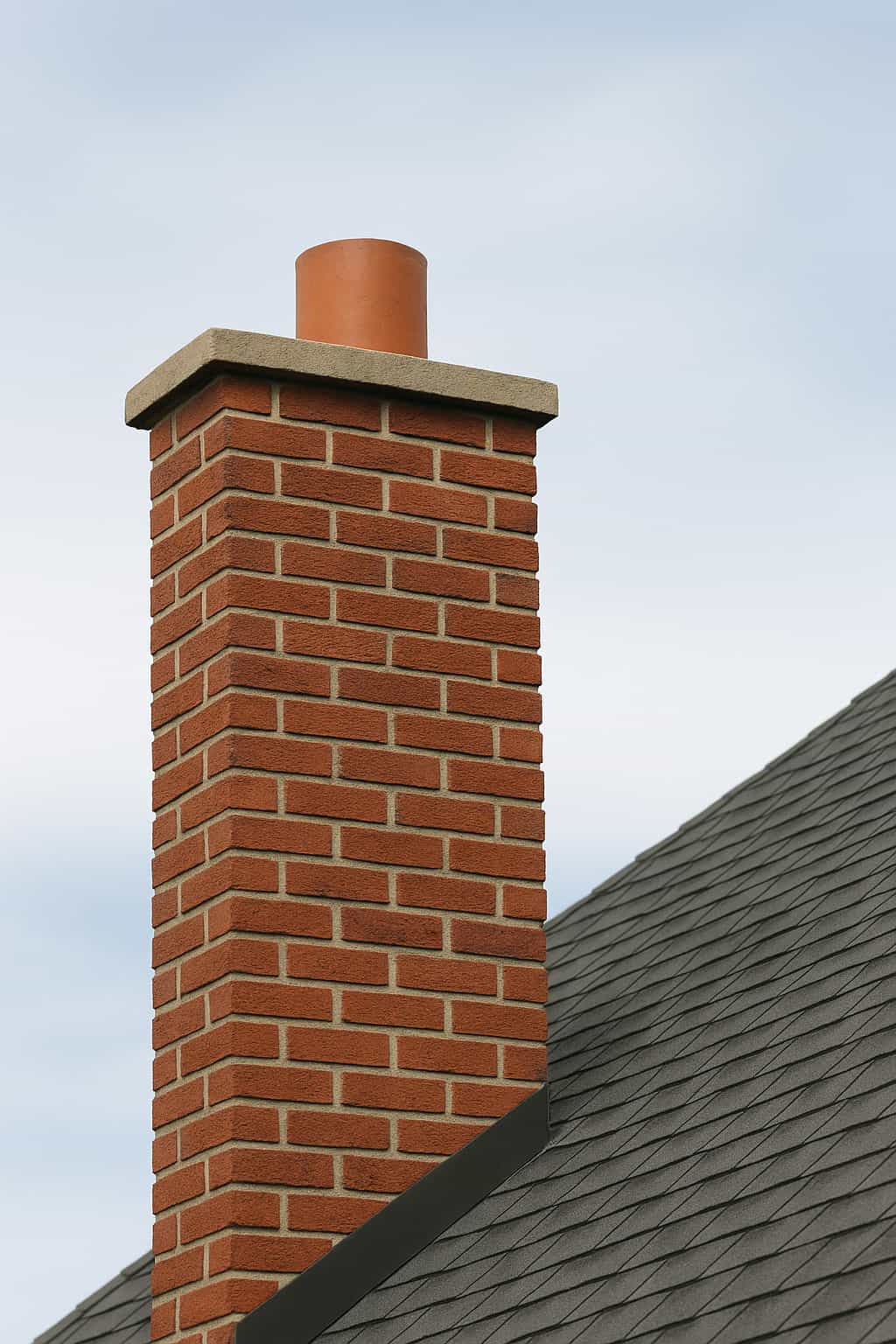
The crown is the sloped masonry or concrete surface at the top of the chimney. Its job is to direct water away from the flue and brickwork.
The cap helps keep rain, snow, animals, and debris from entering the flue.
If the crown is cracked or the cap is missing, water can enter the chimney and accelerate deterioration.
Common crown and cap issues include:
- Cracked crown
- Flat or poorly sloped crown
- Missing cap
- Rusted cap
- Water pooling at the top
- Open flue exposure
- Cracking around the flue liner
A damaged chimney crown can turn a small repair into a larger rebuild if left too long.
Why Previous Chimney Repairs Often Fail
Many chimney repairs fail because they only address the surface.
Common poor chimney repairs include:
- Smearing mortar over damaged joints
- Caulking cracks instead of repairing masonry
- Using mortar that is too hard
- Replacing brick without fixing water entry
- Patching a crown that needs proper repair
- Ignoring flashing problems
- Rebuilding with poorly matched brick
- Leaving the flue or cap unprotected
A chimney repair should solve the cause, not just hide the symptom.
If water keeps getting in, the same problem will return.
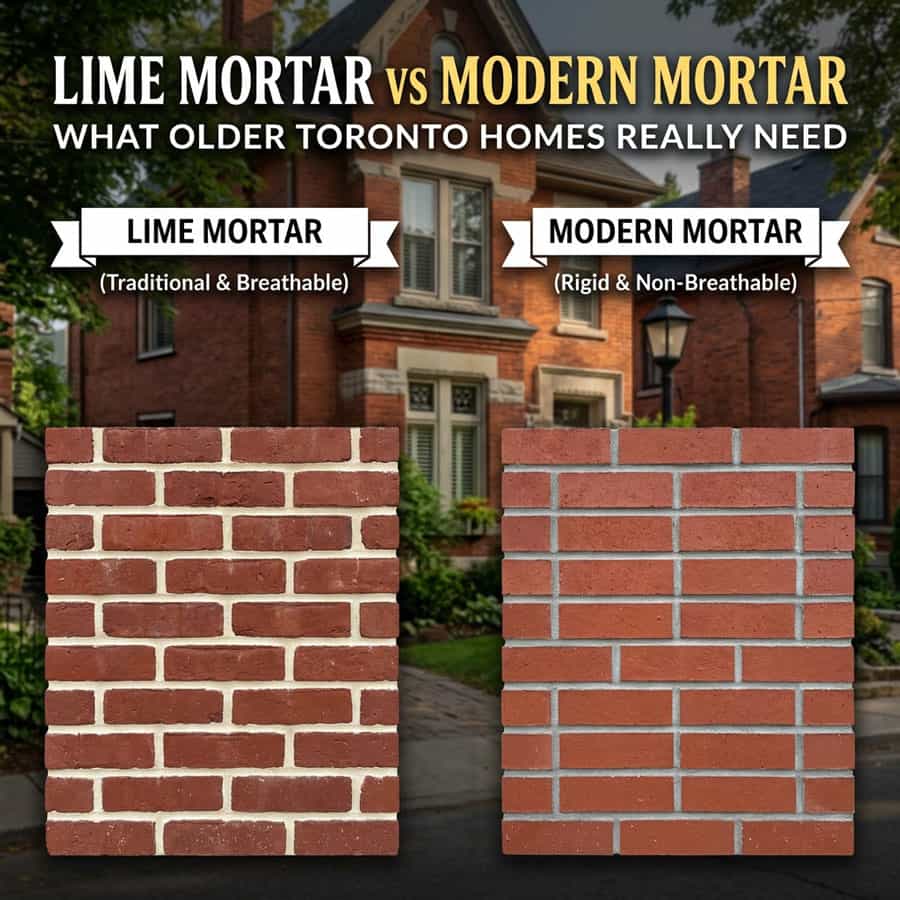
Why Toronto Chimneys Need Proper Materials
Toronto chimneys often belong to older brick homes. That means material compatibility matters.
The repair mortar should suit the existing brick. Brick replacement should match as closely as possible in size, texture, colour, and durability. The chimney crown should be designed to shed water properly.
Using the wrong mortar or mismatched brick can lead to more damage, especially after repeated freeze-thaw cycles.
A chimney repair that looks good in July still has to survive February.
Should You Repair a Chimney Before Winter?
In many cases, yes.
If your chimney has open mortar joints, loose brick, or visible water entry, winter can make the damage worse. Water gets into openings, freezes, expands, and pushes the masonry apart.
Fall is often a smart time to inspect and repair chimney masonry before freeze-thaw cycles begin.
That said, if the chimney is unstable, leaking badly, or has loose bricks, it should be looked at sooner rather than later regardless of season.
Can a Chimney Be Repaired Without Rebuilding It?
Yes, if the chimney is still structurally sound.
Possible repairs include:
- Repointing mortar joints
- Replacing isolated damaged bricks
- Repairing or replacing the chimney crown
- Installing or replacing a chimney cap
- Repairing flashing-related masonry damage
- Cleaning and restoring exterior brick
- Addressing minor cracks before they spread
But if the chimney is leaning, unstable, or badly deteriorated, repair may not be enough.
That is why inspection matters.
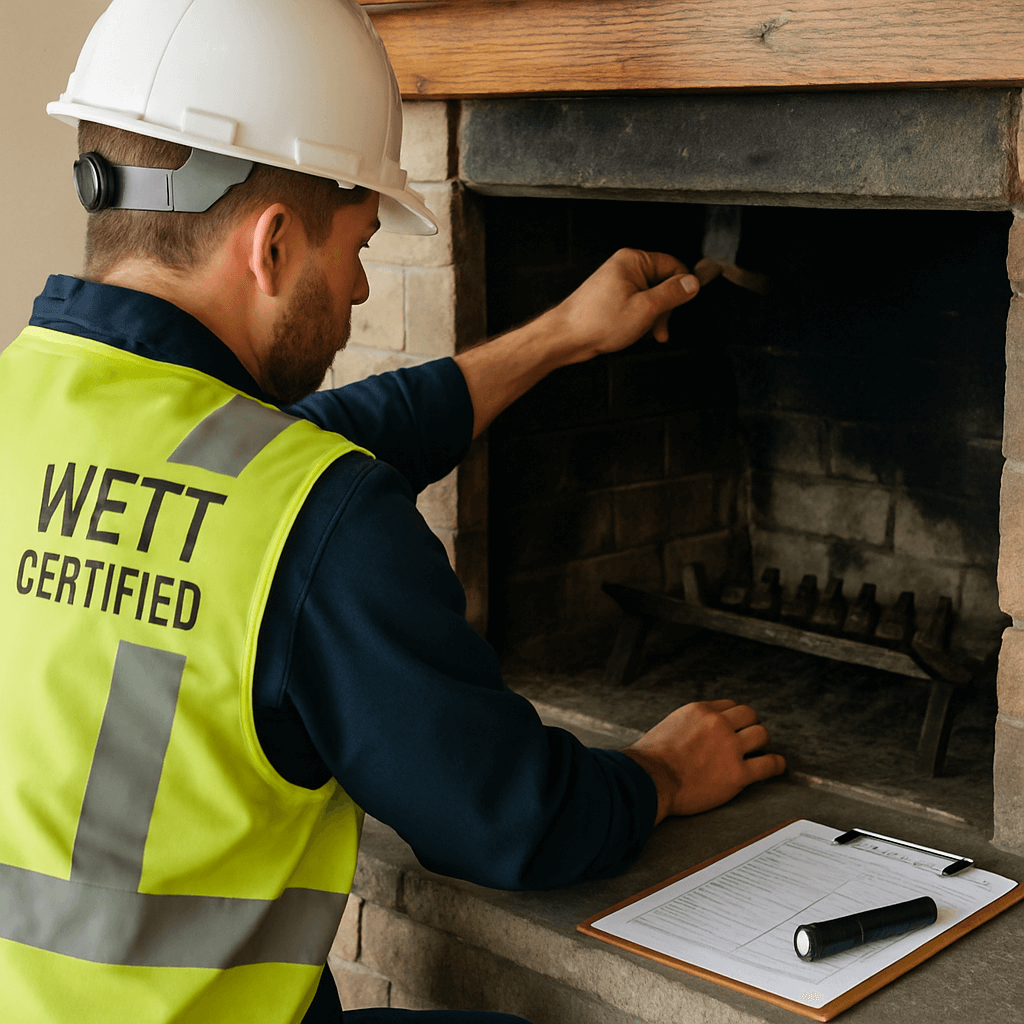
How a Mason Decides What Your Chimney Needs
A proper chimney assessment usually looks at:
- Brick condition
- Mortar condition
- Chimney crown
- Chimney cap
- Flashing area
- Signs of water entry
- Whether the chimney is leaning
- Whether bricks are loose
- How far the damage extends
- Whether the chimney is active or unused
- Safety concerns
- Previous repair history
From there, the best option may be repair, partial rebuild, full rebuild, or removal.
The right answer should be based on the condition of the chimney, not guesswork.
Final Thoughts
If your chimney is cracked, crumbling, leaning, leaking, or losing bricks, it should not be ignored.
Small chimney repairs can often prevent larger rebuilds. But once damage spreads too far, a partial or full rebuild may be the safer and more practical solution. If the chimney is no longer used and has become a repeated maintenance problem, removal may also be worth considering.
The most important thing is to understand the real condition of the chimney before deciding.
With chimneys, waiting rarely makes the repair smaller.
Tiny crack today, roofline brick confetti tomorrow. Not ideal.
Call to Action
If you are unsure whether your chimney needs repair, rebuilding, or removal, Bowman Masonry can inspect the damage and explain your options clearly.
From chimney repointing and brick replacement to partial rebuilds, full rebuilds, and safe chimney removal, Bowman Masonry helps Toronto and GTA homeowners protect their homes from masonry damage, water entry, and unsafe chimney conditions.
Contact Bowman Masonry today to request an estimate.
FAQ Section
How do I know if my chimney needs repair or rebuilding?
Your chimney may only need repair if the damage is minor and the structure is still stable. Rebuilding may be needed if the chimney is leaning, has widespread brick damage, or has major mortar failure.
When should a chimney be removed instead of rebuilt?
Chimney removal may make sense if the chimney is unused, severely deteriorated, unsafe, or no longer connected to a working fireplace or heating system.
Is a leaning chimney dangerous?
A leaning chimney can be dangerous and should be inspected promptly. It may indicate structural movement, foundation issues, severe mortar failure, or separation from the home.
Can chimney brick be replaced without rebuilding the whole chimney?
Yes. If only a few bricks are damaged and the chimney is otherwise stable, individual brick replacement may be enough. If damage is widespread, rebuilding may be required.
Why do chimneys deteriorate faster than walls?
Chimneys are exposed to weather from all sides. Rain, snow, ice, wind, and freeze-thaw cycles can damage brick, mortar, crowns, caps, and flashing over time.
What causes chimney leaks?
Chimney leaks can be caused by cracked crowns, missing caps, failed flashing, damaged mortar joints, spalling brick, or water entering through the flue.
Should chimney repairs be done before winter?
Yes, when possible. Open mortar joints, cracked crowns, and damaged brick can worsen during freeze-thaw cycles. Repairing chimney damage before winter can help prevent larger problems.