
Not all mortar is the same.
That may sound like a small detail, but on older Toronto brick homes, the wrong mortar can create serious masonry problems over time.
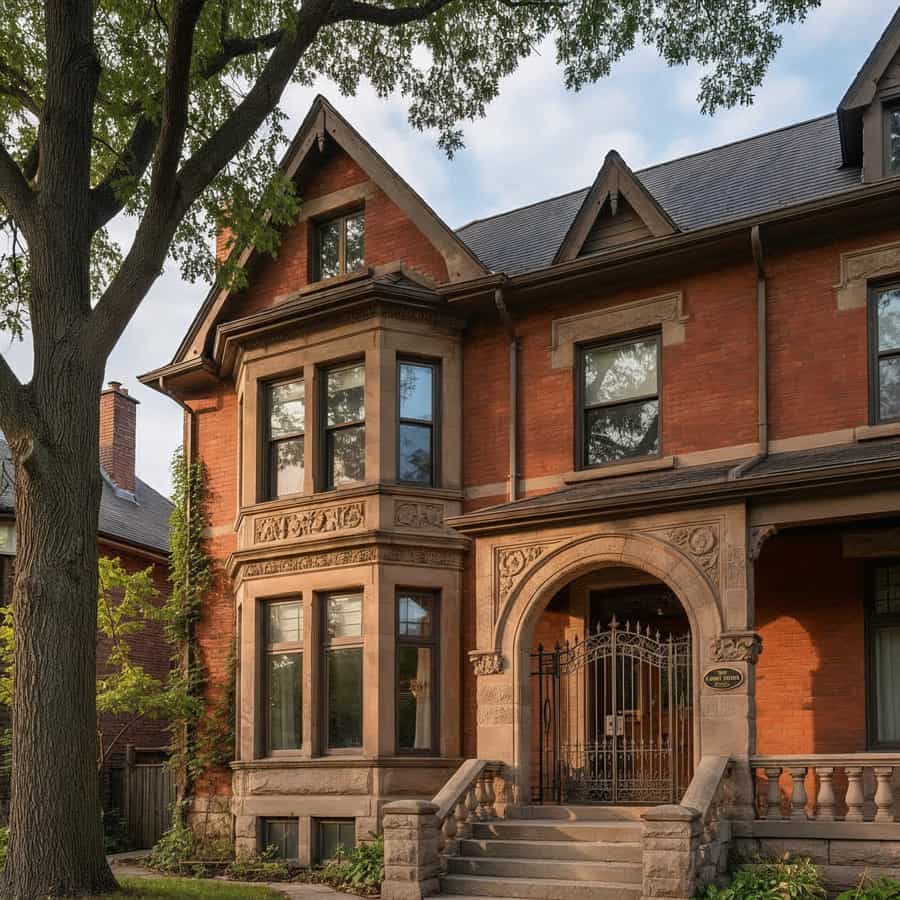
Many century homes, heritage properties, and older brick buildings in Toronto were built with softer brick and softer lime-based mortar. These materials were designed to work together. They allowed the wall to breathe, absorb slight movement, and release moisture naturally.
Modern cement mortar is harder, stronger, and less forgiving.
That does not automatically make it better.
In fact, when hard modern mortar is used on older soft brick, the brick can become the weakest part of the wall. Over time, this can lead to cracking, spalling, moisture damage, and premature brick failure.
In masonry, stronger is not always smarter. Bit like using a sledgehammer to hang a picture. Impressive, but wrong.
What Is Mortar?
Mortar is the material between bricks or stones.
Its job is to:
- Hold the masonry units together
- Seal the joints
- Manage moisture
- Allow slight movement
- Support the wall system
- Protect the brick or stone around it
A good mortar joint does more than fill a gap. It helps the wall perform properly.
That is especially important on older Toronto homes, where the original brick and mortar were often designed to be softer and more breathable than modern materials.
What Is Lime Mortar?
Lime mortar is a traditional mortar made with lime, sand, and water. It was commonly used in older masonry construction before modern Portland cement became standard.
Lime mortar is usually softer, more flexible, and more breathable than hard cement mortar.
That means it can allow moisture to move through the wall and escape, rather than trapping it inside the brickwork.
This matters because older brick often absorbs moisture. If the mortar allows that moisture to dry out, the wall can remain healthier for longer.
What Is Modern Cement Mortar?
Modern cement mortar usually contains Portland cement, which makes it harder, denser, and stronger.
That strength can be useful in modern construction, especially where the brick or block is also hard and dense.
But older Toronto homes are a different story.
Many older bricks are softer than today’s masonry units. If hard mortar is packed around soft brick, the wall can lose its natural balance. Instead of the mortar absorbing movement or weathering slowly, the brick may crack, chip, or spall.
The mortar wins the fight. The brick loses. Nobody wants that.
Why Older Toronto Homes Often Need Softer Mortar
Older brick walls were not built like modern walls.
Many older Toronto homes were designed as mass masonry walls. These walls manage moisture differently than newer cavity wall systems. They often absorb some moisture and then dry out naturally.
For that system to work, the mortar needs to be compatible with the brick.
Softer lime-based mortar can help because it:
- Allows the wall to breathe
- Lets moisture escape more easily
- Handles small movements better
- Reduces stress on softer brick
- Can be easier to remove during future repairs
- Preserves the character of older masonry
The goal is not to make the wall “harder.” The goal is to keep the wall working the way it was built to work.
What Happens When the Wrong Mortar Is Used?
When hard cement mortar is used on older soft brick, several problems can develop.
Brick Spalling
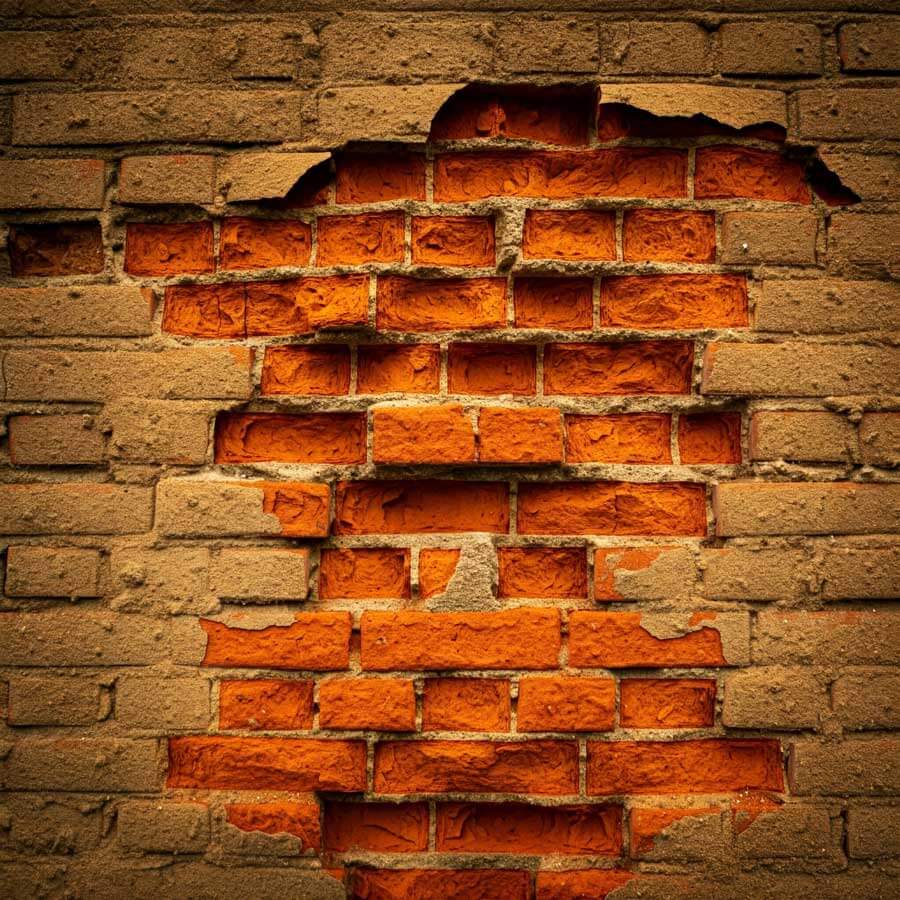
Spalling happens when the face of the brick flakes, pops, chips, or crumbles away.
Hard mortar can trap moisture inside the brick. When that moisture freezes during a Toronto winter, it expands and can break the brick apart.
Cracked Brick
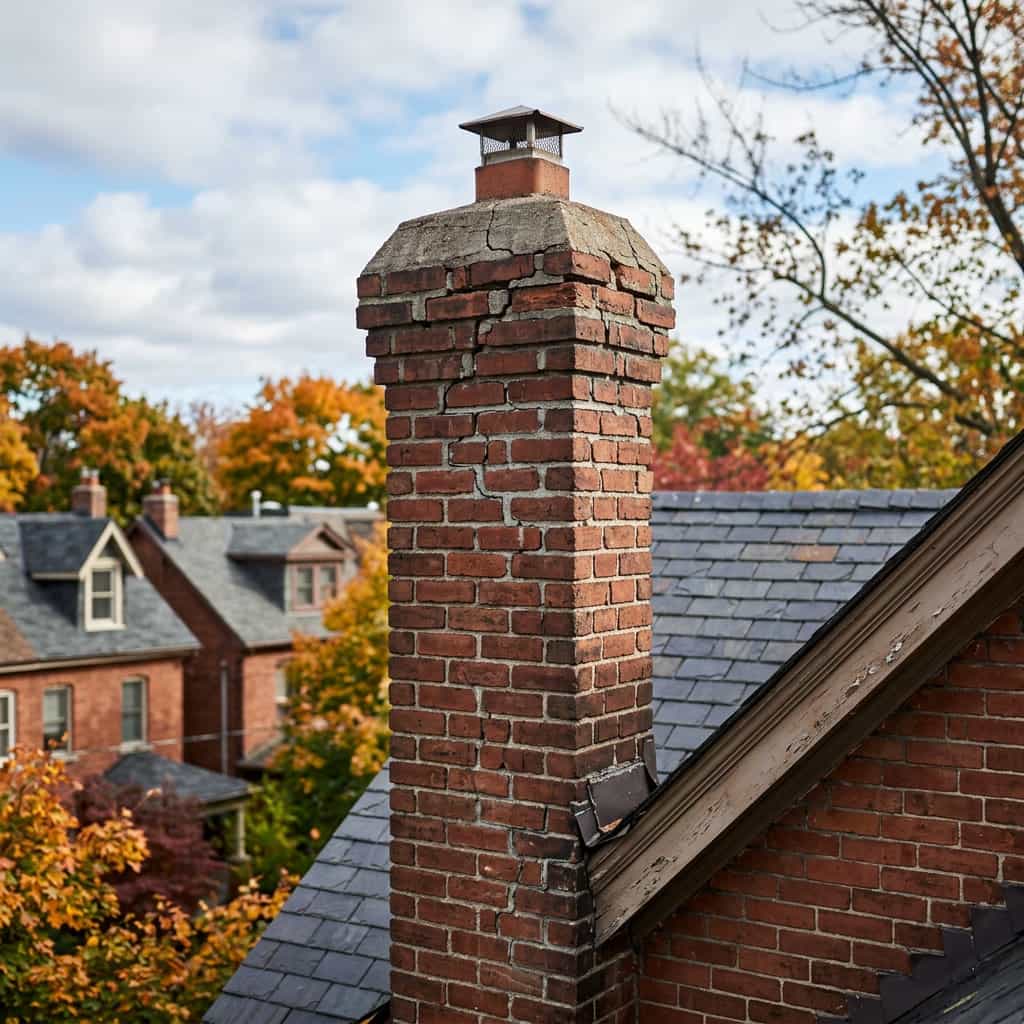
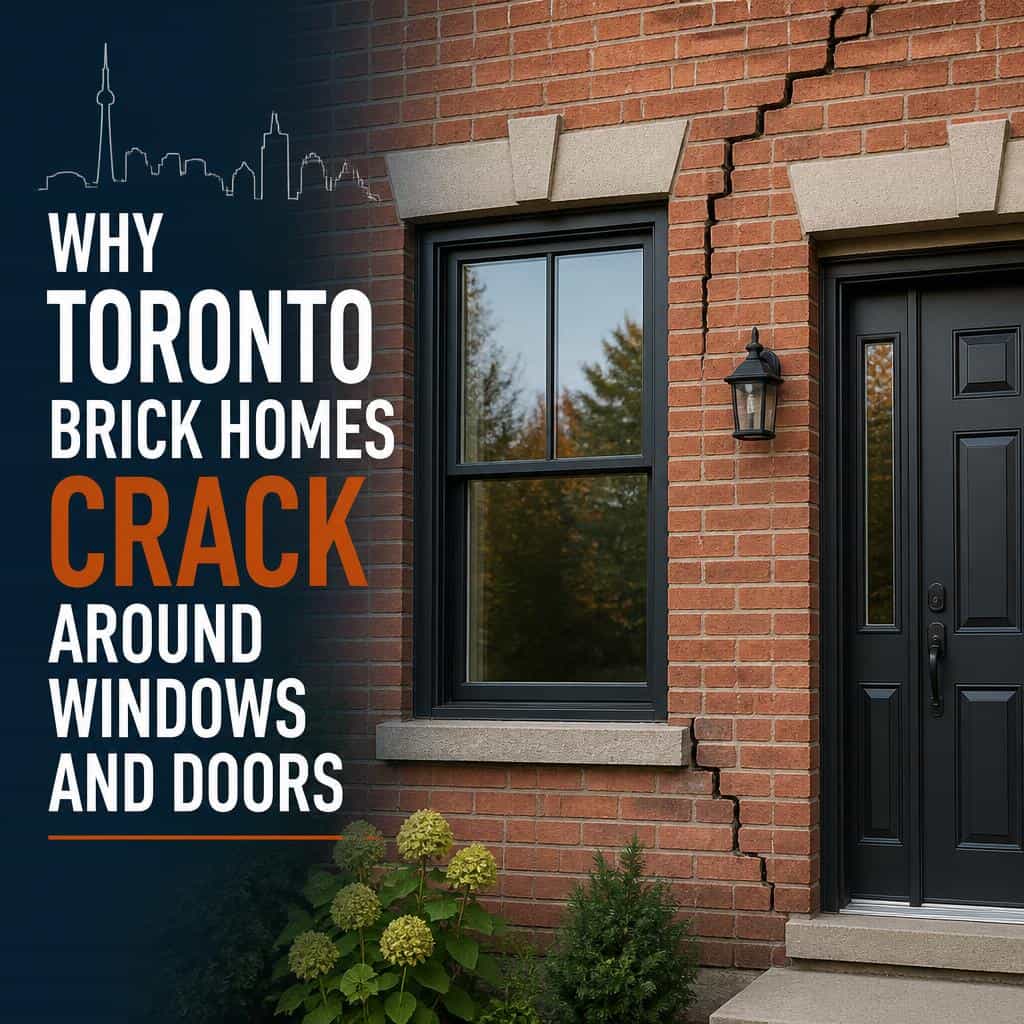
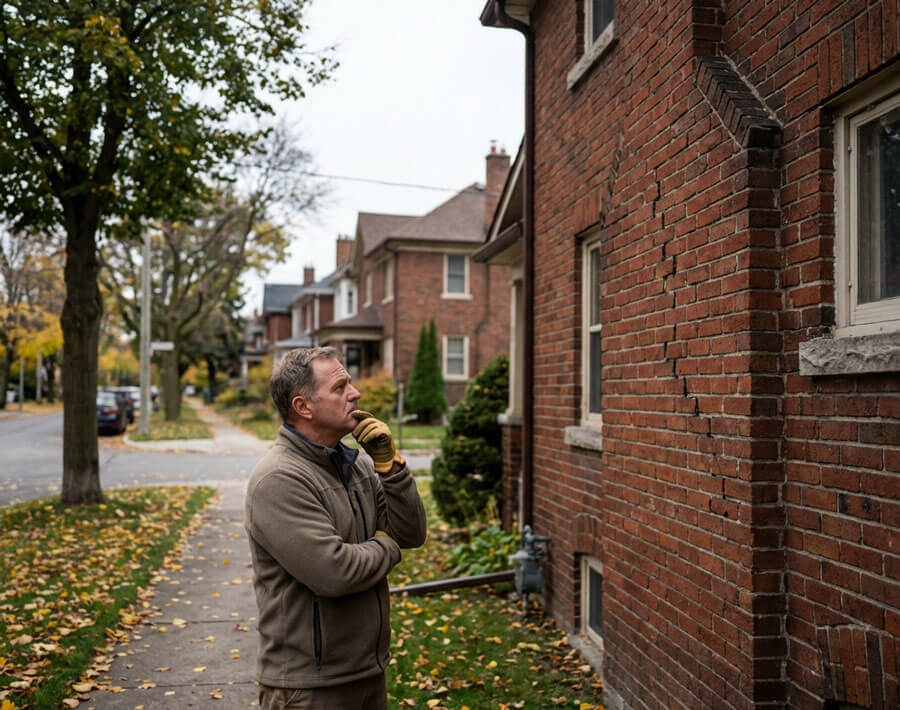
If the mortar is harder than the brick, stress from movement, settling, or freeze-thaw cycles may transfer into the brick instead of the joint.
The result can be cracked brick faces or broken masonry units.
Moisture Problems
Older walls need to dry. Dense mortar can slow drying and keep moisture trapped in the masonry longer than it should.
That can lead to more deterioration over time.
Failed Repairs
A repair may look fine when first completed, but if the mortar is incompatible, problems can return. Sometimes they come back worse.
Poor Appearance
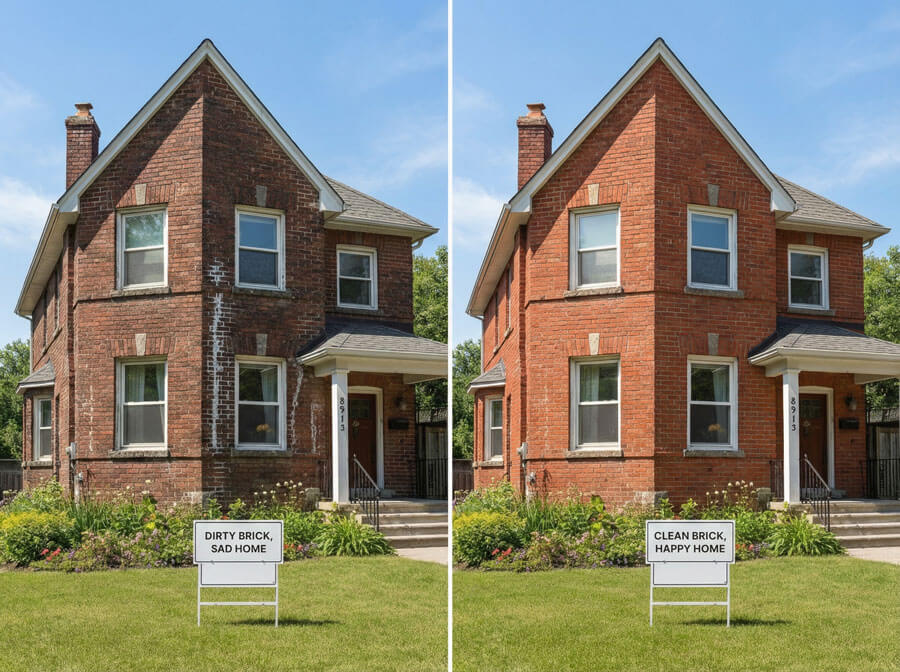
Hard modern repairs often look different from the original masonry. The colour, texture, and joint finish may stand out, making the wall look patched instead of restored.
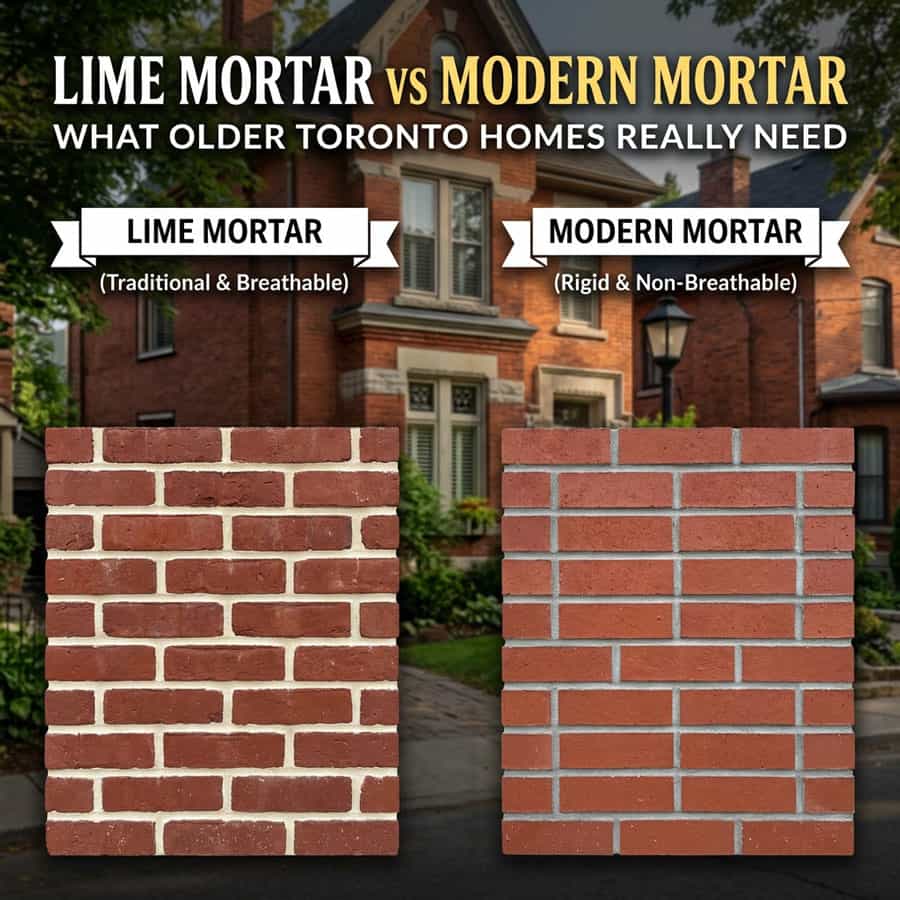
Lime Mortar vs Modern Mortar: The Simple Difference
Here is the homeowner version:
Lime mortar is usually softer, more breathable, and more flexible.
Modern cement mortar is usually harder, denser, and stronger.
That does not mean one is always good and the other is always bad.
It means the mortar must suit the building.
For newer masonry, cement-based mortar may be perfectly appropriate. For older Toronto brick homes, especially homes with soft brick or historic masonry, a softer compatible mortar may be the better choice.
How to Tell If Your Home May Need Lime-Based Mortar
You may need a softer or lime-based mortar approach if your home has:
- Older soft brick
- Original masonry from the early or mid-1900s
- Heritage or century-home construction
- Powdery or sandy old mortar
- Recessed or deteriorated mortar joints
- Previous hard cement patching
- Brick faces starting to spall near old repairs
- Cracks around repaired joints
- Moisture issues after repointing
- Mismatched grey cement repairs on older red brick
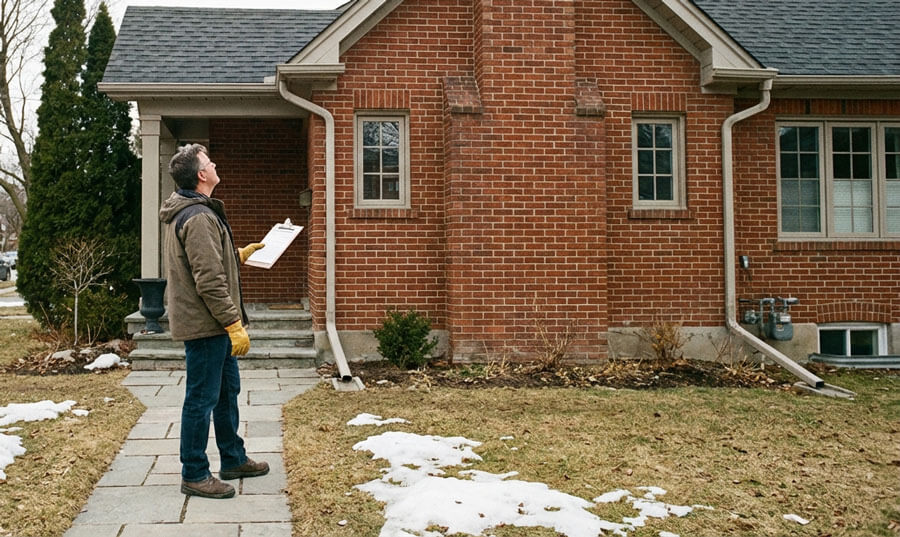
A proper mason does not guess by eye alone. The existing mortar, brick condition, age of the building, and repair history all matter.
Why Repointing Older Brick Takes Experience
Repointing older brick is not just “scrape out the old stuff and pack in new stuff.”
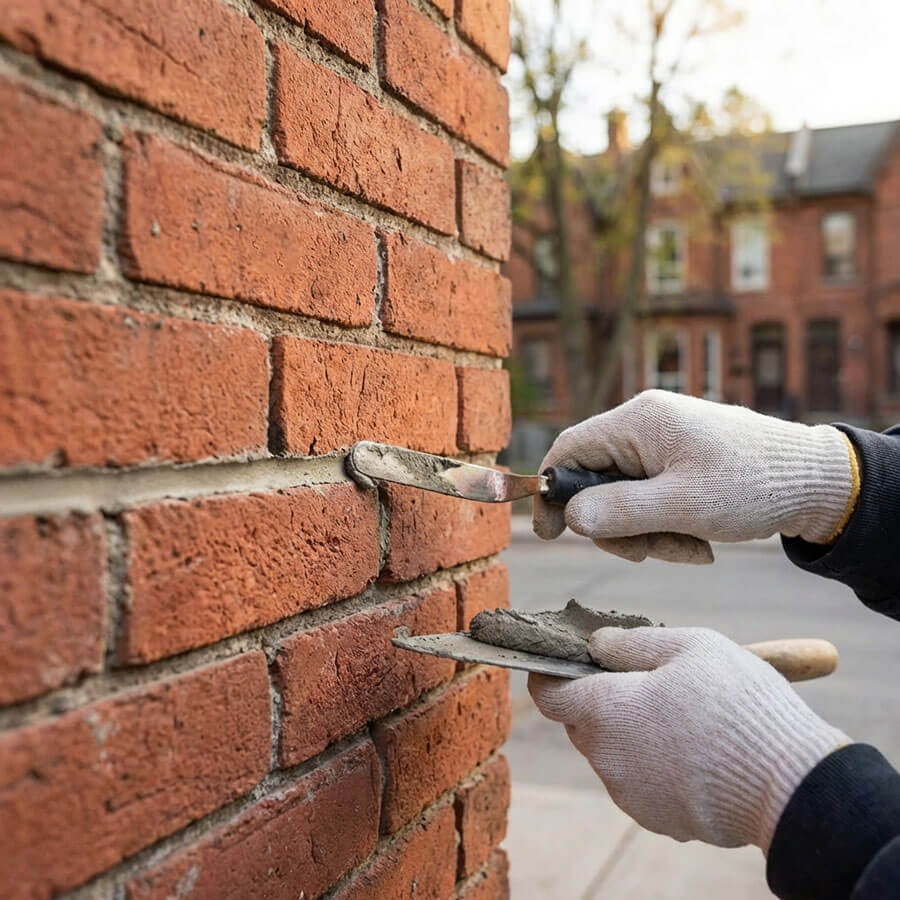
Done properly, repointing should include:
- Removing deteriorated mortar carefully
- Avoiding damage to the surrounding brick
- Choosing compatible replacement mortar
- Matching the colour and texture
- Matching the joint profile
- Controlling moisture during curing
- Protecting the finished repair
- Blending the repair with the existing wall
This is skilled restoration work.
A rushed repointing job can damage brick edges, use the wrong mortar, or leave joints that fail too soon.
Why Harder Mortar Is Not Always Better
Homeowners often assume stronger means better.
With masonry, that is not always true.
Mortar is supposed to be the sacrificial part of the wall. In many older buildings, it is better for mortar to wear down slowly over time than for the brick itself to fail.
If mortar is too hard, the brick may crack before the mortar does.
That is the opposite of what you want.
A properly chosen mortar protects the brick. A poorly chosen mortar competes with it.
Toronto Weather Makes Compatibility Even More Important
Toronto masonry deals with:
- Freeze-thaw cycles
- Heavy rain
- Snow and ice
- Humidity
- Road salt
- Sudden temperature swings
- Long winter moisture exposure
These conditions make mortar compatibility even more important.
If water gets into old brickwork and cannot escape, winter can accelerate the damage. That is why breathable, compatible masonry repairs matter so much on older Toronto homes.
The wall needs to dry. If it cannot dry, it starts complaining — usually in expensive ways.
What About Mortar Colour Matching?
Mortar colour matters too.
On older brick homes, the mortar joint can dramatically affect the look of the wall. If the new mortar is too grey, too white, too dark, or too smooth, the repair can stand out.
A good masonry restoration should consider:
- Sand colour
- Lime content
- Cement content
- Joint profile
- Texture
- Existing weathering
- Surrounding brick colour
The goal is a repair that looks natural, not freshly smeared on like cake icing by a raccoon.
Should All Older Homes Use Lime Mortar?
Not always.
This is where good judgment matters.
Some older homes may need a lime-rich mortar. Others may need a carefully balanced mortar mix that includes some cement but remains compatible with the existing brick.
The correct choice depends on:
- Age of the building
- Type of brick
- Condition of the masonry
- Existing mortar
- Exposure to weather
- Location of the repair
- Whether previous repairs were done
- Structural requirements
So the answer is not automatically “lime mortar for everything.”
The answer is: use the mortar that matches the masonry system.
Signs of Bad Mortar Repairs
You may be looking at poor or incompatible mortar work if you notice:
- Mortar smeared over the brick face
- Very hard grey joints on older red brick
- Brick edges chipped from grinding
- New cracks beside repaired joints
- Brick faces flaking near repaired areas
- Repairs that look much brighter or darker than the wall
- Mortar falling out after only a few years
- Moisture stains near patched areas
Bad repointing is not just ugly. It can make future repairs harder and more expensive.
Why This Matters for Heritage and Older Toronto Homes
Toronto has many older masonry homes with character that cannot be replaced easily.
The brick colour, mortar joints, texture, and craftsmanship all contribute to the look and value of the property.
Using the wrong materials can change the appearance of the home and damage the original masonry.
Proper restoration is about more than making the wall look neat. It is about preserving the building while helping it perform properly in today’s climate.
That is where an experienced masonry contractor matters.
Final Thoughts
Older Toronto brick homes need the right mortar, not simply the strongest mortar.
Lime mortar and lime-compatible mixes can help older masonry breathe, move slightly, and release moisture more naturally. Modern cement mortar can be useful in the right setting, but when used incorrectly on older soft brick, it can cause damage over time.
If your home has cracked mortar, spalling brick, old patch repairs, or moisture issues, the mortar may be part of the problem.
The best repair starts with understanding the wall.
Because with older masonry, compatibility is everything.
If your older Toronto brick home needs repointing, mortar repair, or masonry restoration, Bowman Masonry can inspect the brickwork and recommend a repair approach that suits the age and condition of your home.
From traditional repointing and brick restoration to older home masonry repairs, Bowman Masonry helps Toronto homeowners protect the character, strength, and long-term value of their brickwork.
Contact Bowman Masonry today to request an estimate.
FAQ Section
Is lime mortar better than cement mortar?
Lime mortar is not always better, but it is often more appropriate for older soft brick and historic masonry. Modern cement mortar can be too hard for some older brick walls.
Why is hard mortar bad for old brick?
Hard mortar can put too much stress on softer old brick. It may also trap moisture, which can contribute to cracking, spalling, and freeze-thaw damage.
How do I know if my Toronto home has lime mortar?
Older homes may have softer, more powdery, or sandy mortar. A masonry contractor can inspect the joints and determine what type of repair mortar may be appropriate.
Can you repoint old brick with modern mortar?
Sometimes, but it depends on the brick and existing mortar. On older soft brick, a hard modern cement mortar may cause damage over time. Compatibility matters.
Does lime mortar help old walls breathe?
Yes, lime mortar is generally more breathable than dense cement mortar. This can help older masonry release moisture instead of trapping it inside the wall.
Why does mortar colour matching matter?
Mortar affects the finished appearance of the wall. Poor colour or texture matching can make repairs stand out and reduce the natural character of older brickwork.