
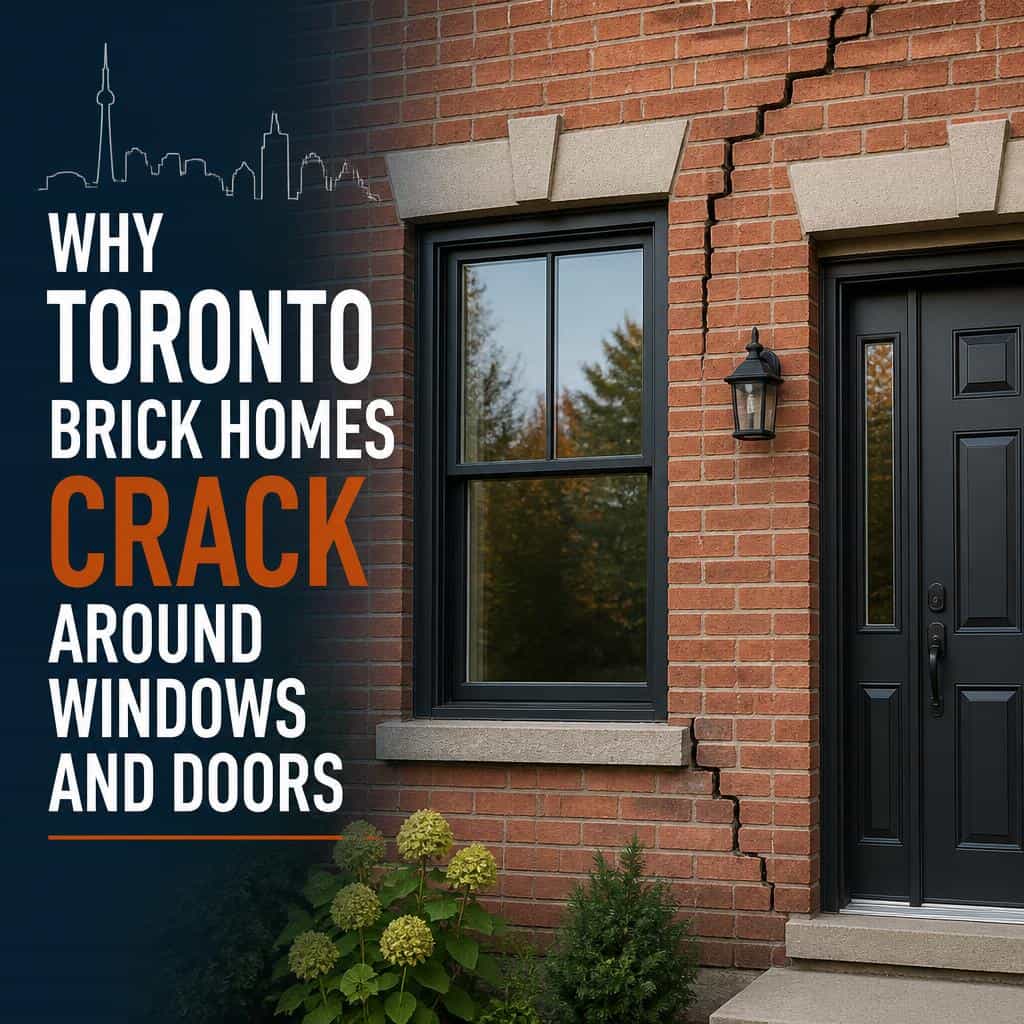
Why Brick Cracks Around Windows and Doors in Toronto Homes
Brick cracks around windows and doors are one of the most common masonry problems found on Toronto homes, especially older brick houses.
Sometimes the cracks are small and cosmetic. Other times, they are signs of movement, moisture problems, lintel failure, aging mortar, or stress in the wall system.
The tricky part is that not all brick cracks mean the same thing.
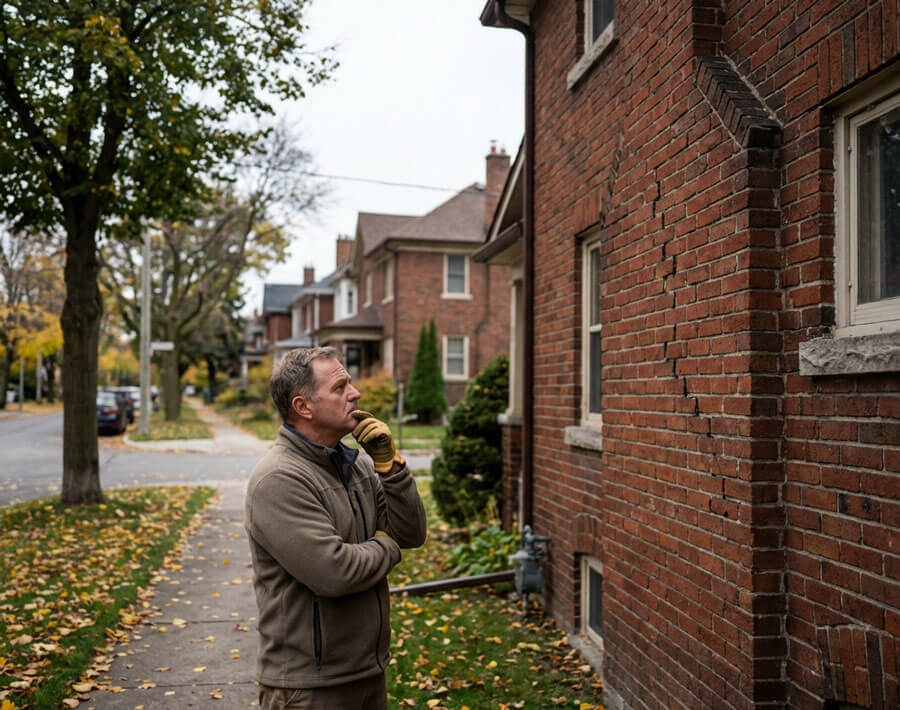
A small hairline crack in the mortar may not be urgent. A widening stair-step crack above a window or a crack running from the corner of a door opening may deserve a much closer look.
For homeowners in Toronto and the GTA, understanding why these cracks happen can help you decide whether the issue needs simple repointing, brick replacement, lintel repair, or a more detailed masonry restoration.
Why Cracks Often Appear Around Windows and Doors
Windows and doors are natural weak points in a brick wall.
A solid brick wall carries weight evenly. But once you cut openings into that wall for windows and doors, the weight has to be redirected around those openings. That is where stress often shows up.
The corners of windows and doors are especially vulnerable because they concentrate movement in a small area.
This is why cracks often appear:
- near the top corners of windows
- near the bottom corners of windows
- above doors
- beside door frames
- in stair-step patterns through mortar joints
- along damaged or weakened brickwork
In many Toronto homes, these cracks are not caused by one single issue. They are usually the result of age, moisture, settlement, freeze-thaw cycles, and past repairs all working together.
Brickwork has patience — but it does not have infinite patience.
Common Causes of Brick Cracks Around Windows and Doors
1. Natural House Settlement
Every home settles over time.
As the ground beneath the foundation shifts slightly, the structure can move. In many cases, this movement is minor. But masonry does not flex the same way wood or siding can.
Brick and mortar are strong, but they are rigid. When the wall moves, cracks can appear at stress points. Window and door openings are often where that stress becomes visible first.
Small settlement cracks may remain stable for years. However, if cracks continue to grow, widen, or spread, it is worth having them inspected.
2. Freeze-Thaw Damage
Toronto’s climate is hard on masonry.
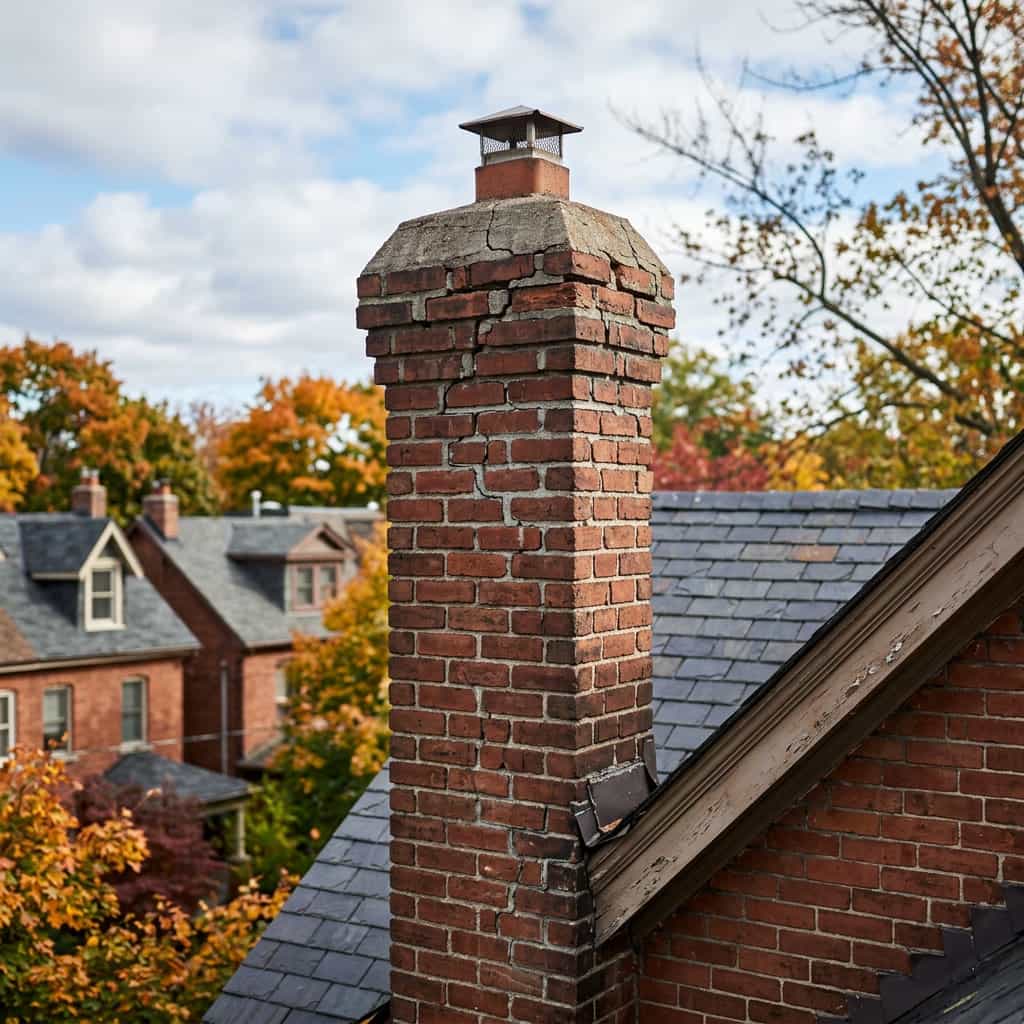
Water enters small cracks, porous brick, or failing mortar joints. When temperatures drop, that moisture freezes and expands. As it expands, it puts pressure on the surrounding brick and mortar.
Over time, this freeze-thaw cycle can make small cracks larger.
This is especially common around windows and doors because these areas often collect more moisture due to ledges, sills, flashing details, and exposed corners.
Signs of freeze-thaw damage may include:
- flaking brick faces
- crumbling mortar
- widening cracks
- loose or broken bricks
- white staining or efflorescence
- moisture marks near openings
Once water gets into a wall, winter does the rest. Very Canadian. Very rude.
3. Failing Mortar Joints
Mortar is meant to protect the wall and hold the brickwork together, but it does not last forever.
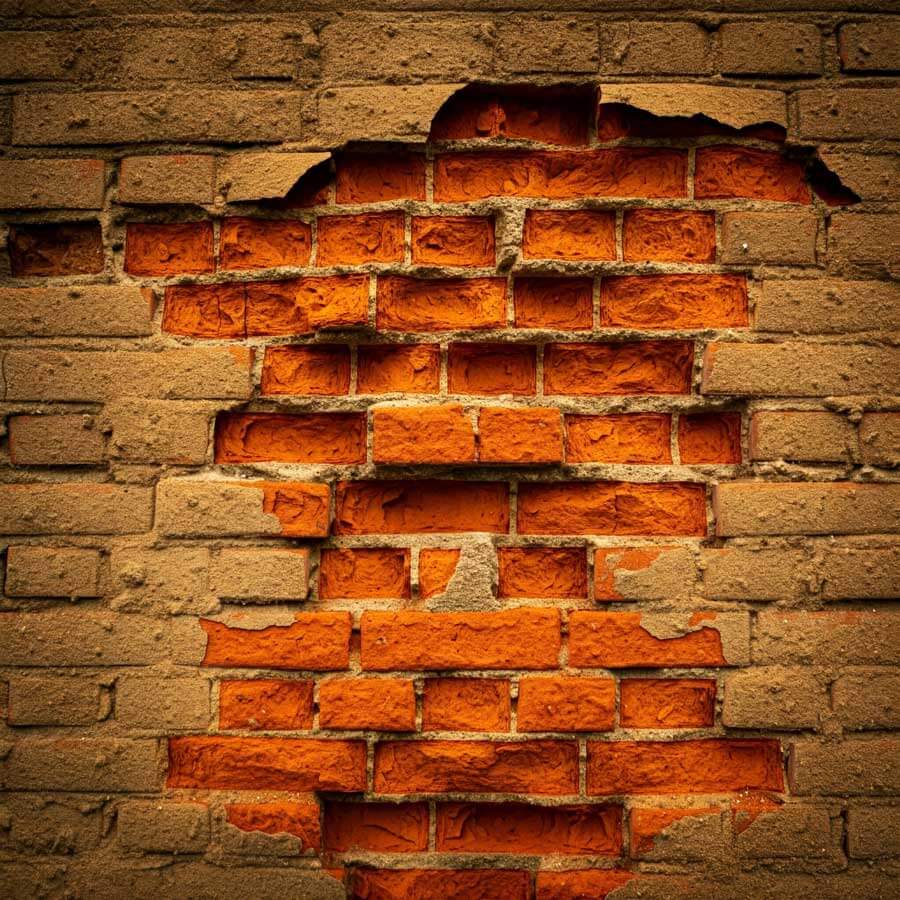
On older Toronto homes, mortar joints may become soft, cracked, recessed, or powdery. When mortar weakens around windows and doors, the brickwork has less support.
This can lead to cracks forming in a stair-step pattern through the joints.
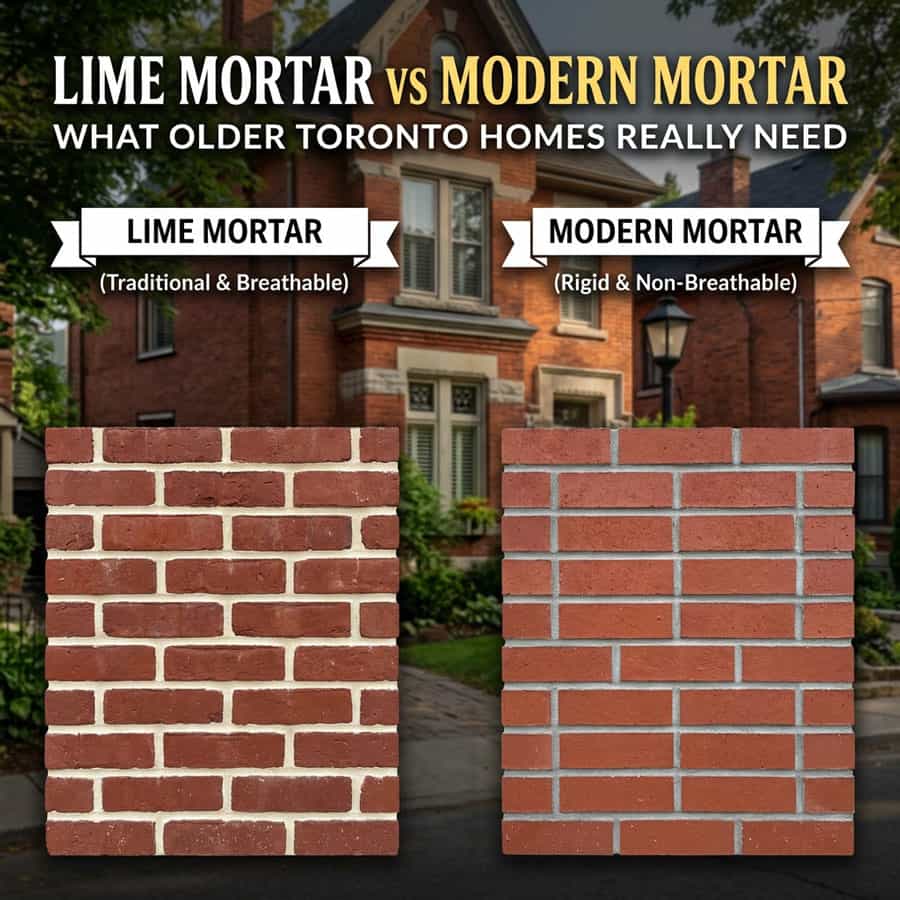
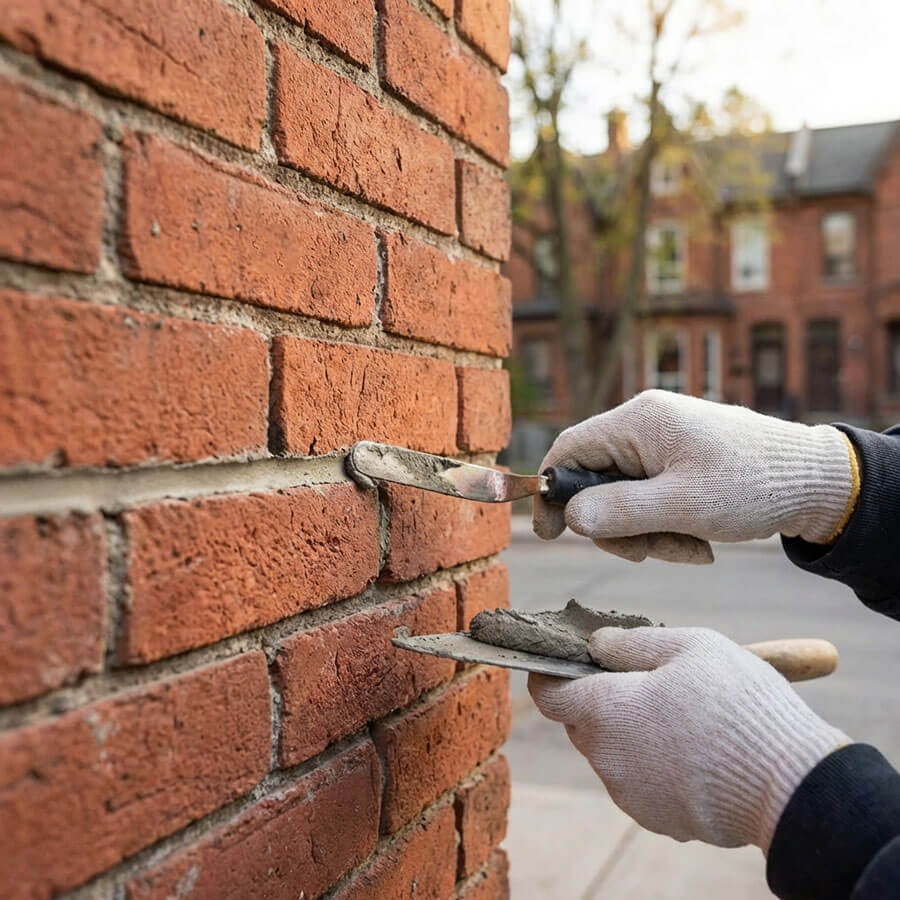
In many cases, repointing may be needed. Repointing involves removing damaged mortar and replacing it with new mortar that is appropriate for the age and type of brick.
The key word there is appropriate.
Older brick often needs a softer mortar than modern brick. Using mortar that is too hard can cause more damage over time.
4. Rusting or Failing Steel Lintels
A lintel is the horizontal support above a window or door opening.
In many Toronto homes, steel lintels are used to support the brickwork above windows and doors. When a steel lintel begins to rust, it can expand. That expansion pushes against the surrounding masonry.
This can cause cracks above windows, lifting brickwork, or separation in the mortar joints.
Common signs of lintel-related cracking include:
- horizontal cracks above a window
- stair-step cracks from the upper corners
- bulging brickwork above the opening
- rust staining
- brick displacement
- cracks that return after basic patching
This is important because simply filling the crack may not solve the problem.
If the lintel is rusting or failing, the source of the pressure needs to be addressed. Otherwise, the crack will likely come back.
5. Damaged or Poorly Sloped Window Sills
Stone, concrete, and brick window sills play an important role in directing water away from the wall.
When sills crack, shift, or lose their proper slope, water can run back into the masonry instead of away from it.
That water may enter the wall below or beside the window, leading to mortar deterioration, brick damage, and cracking.
Signs of sill-related masonry problems include:
- cracks below windows
- loose mortar under the sill
- water staining
- damaged brick beneath the opening
- cracked or separated stone sills
- mortar gaps around the sill ends
In older Toronto neighbourhoods, damaged sills are a very common reason brickwork around windows begins to fail.
6. Previous Poor Repairs
Not all masonry repairs are good masonry repairs.
Some cracks around windows and doors are made worse by past patch jobs, hard cement repairs, caulking used where mortar should be, mismatched brick, or surface-only fixes that hide the problem instead of correcting it.
Common poor repairs include:
- using mortar that is too hard
- smearing mortar over the face of the brick
- filling structural cracks with caulking
- replacing soft old brick with incompatible brick
- patching over rusting lintels
- painting over moisture problems
These repairs may look acceptable for a short time, but they can trap moisture, increase pressure, or make future restoration more difficult.
Should You Be Worried About Brick Cracks Around Windows or Doors?
Not every crack is an emergency.
But certain cracks should not be ignored.
You should have the masonry looked at if you notice:
- cracks that are getting wider
- stair-step cracks above windows or doors
- cracks on both the inside and outside wall
- bulging or leaning brickwork
- loose bricks
- rust stains above windows
- crumbling mortar
- water entering around openings
- cracks that return after being repaired
A stable hairline crack may only require monitoring or minor repointing. But cracks connected to lintel failure, water damage, or wall movement usually need proper masonry repair.
The important thing is not to guess.
Brickwork is very good at showing symptoms. The job is to understand what those symptoms mean.
Why Toronto Homes Are Especially Prone to These Cracks
Toronto has many older brick homes, including century homes, post-war homes, and mid-century properties built with materials and methods that differ from modern construction.
Add in Toronto’s climate, and masonry takes a beating.
The biggest local factors include:
- freeze-thaw cycles
- older soft brick
- aging lime-based mortar
- road salt exposure
- heavy rain and snow
- foundation settlement
- past renovations
- older window replacements
- poor drainage or flashing
- decades of patch repairs
This is why cracks around windows and doors are so common in areas such as older Toronto neighbourhoods, East York, Leaside, The Beaches, Cabbagetown, Rosedale, High Park, Riverdale, North Toronto, and surrounding GTA communities.
Older masonry can last for generations, but it needs the right repairs at the right time.
Repair Options for Brick Cracks Around Windows and Doors
The right repair depends on the cause of the cracking.
Possible repair options may include:
Repointing
If the crack is mainly in the mortar joints, repointing may be enough. Damaged mortar is removed and replaced with suitable new mortar.
Brick Replacement
If individual bricks are cracked, spalling, loose, or badly damaged, they may need to be carefully removed and replaced.
Lintel Repair or Replacement
If the steel lintel above a window or door is rusting, expanding, or failing, it may need to be repaired or replaced before the brickwork is restored.
Sill Repair or Replacement
If a damaged sill is allowing water into the wall, repairing or replacing the sill may be part of the solution.
Larger Masonry Restoration
If the wall has broader movement, widespread mortar failure, or multiple related issues, a more complete restoration may be needed.
The best repair is not always the biggest repair. It is the repair that solves the actual cause.
Why Quick Patch Jobs Often Fail
A crack can be filled in an afternoon.
That does not mean it has been repaired.
If the underlying issue is moisture, rusting steel, settlement, failing mortar, or a damaged sill, the crack may return. In some cases, it may return worse than before.
This is why proper masonry repair should start with looking at the full area around the window or door, not just the visible crack.
A good mason will look at the pattern of the crack, the condition of the mortar, the brick type, the lintel, the sill, drainage, and signs of moisture.
The crack is the clue. The cause is the real problem.
When to Call a Masonry Contractor
You should consider calling a masonry contractor if the crack is growing, if bricks are loose, if there is water entering the home, or if the crack is located above a window or door.
Cracks near openings deserve special attention because they often involve load-bearing details, lintels, sills, or wall movement.
For older Toronto brick homes, it is also important to use a contractor familiar with traditional masonry, older brick, compatible mortar, and careful restoration methods.
A repair that works on a newer wall may not be suitable for a century home.
Final Thoughts
Brick cracks around windows and doors are common in Toronto homes, but they should not be dismissed automatically.
Some cracks are minor. Others are early warnings of moisture problems, lintel failure, aging mortar, or structural movement.
The sooner the cause is understood, the easier it usually is to repair the masonry properly and prevent larger damage.
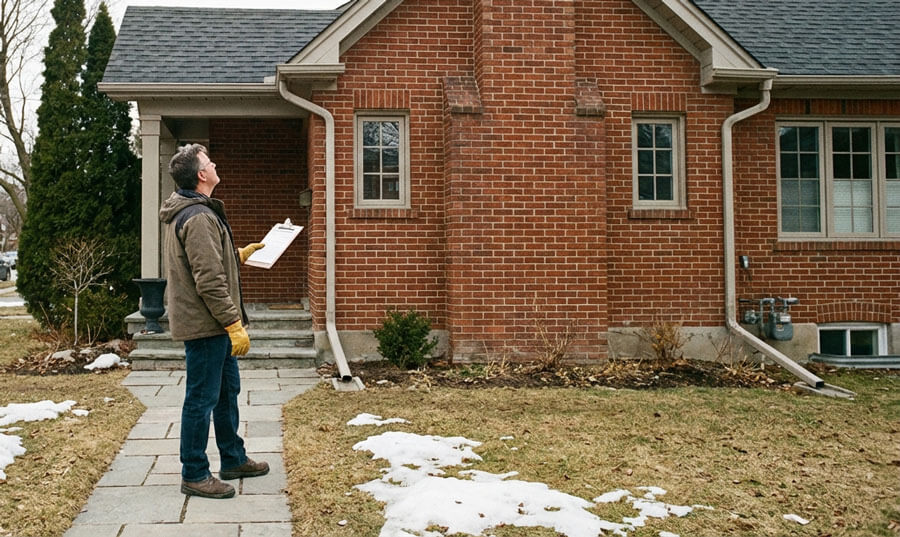
If you see cracks around windows or doors on your Toronto brick home, the smartest first step is to have the masonry inspected by an experienced brick restoration contractor.
A small crack may be simple. A ignored crack can become a full-blown masonry headache — and those do not get cheaper with age.
FAQ Section
Why do brick cracks appear around windows?
Brick cracks often appear around windows because window openings create stress points in the wall. Settlement, freeze-thaw damage, failing mortar, rusting lintels, and water problems can all cause cracks near window corners.
Are stair-step cracks around windows serious?
Stair-step cracks can be a sign of movement, mortar failure, or lintel problems. They are not always an emergency, but they should be inspected if they are widening, spreading, or located above a window or door.
Can cracked brick around a window be repaired?
Yes. Depending on the cause, repairs may include repointing, brick replacement, lintel repair, sill repair, or a larger masonry restoration. The right repair depends on what is causing the crack.
Why do cracks come back after being patched?
Cracks often return when the underlying issue was not fixed. If the cause is rusting steel, moisture, settlement, or failing mortar, simply filling the crack will not solve the problem.
Should old Toronto brick homes use special mortar?
Often, yes. Older Toronto brick homes may require softer, more compatible mortar. Mortar that is too hard can damage older brick and lead to more cracking or spalling over time.
When should I call a masonry contractor?
You should call a masonry contractor if cracks are widening, bricks are loose, mortar is crumbling, water is entering, or cracks appear above windows and doors. These areas often need closer inspection.