
Toronto’s brick homes and chimneys are built to last, but they are constantly under attack from moisture and freeze–thaw cycles. When small issues are ignored, they slowly grow into major repairs, safety hazards, or even full rebuilds.
This guide walks you through early warning signs to watch for around your brick walls and chimney, using plain language so you can decide when it is safe to monitor and when it is time to call in a professional.
Why Catching Problems Early Matters
Brick and mortar look solid, but they are still porous and can absorb water. When temperatures drop below freezing, that trapped water expands, slowly forcing bricks and mortar apart. Over time, this leads to cracks, loose bricks, water leaks, and chimney problems.
Catching issues early usually means simpler, more affordable repairs. Waiting too long can turn a small repointing job into full brick replacement or a complete chimney rebuild.
1. Hairline Cracks That Keep Growing
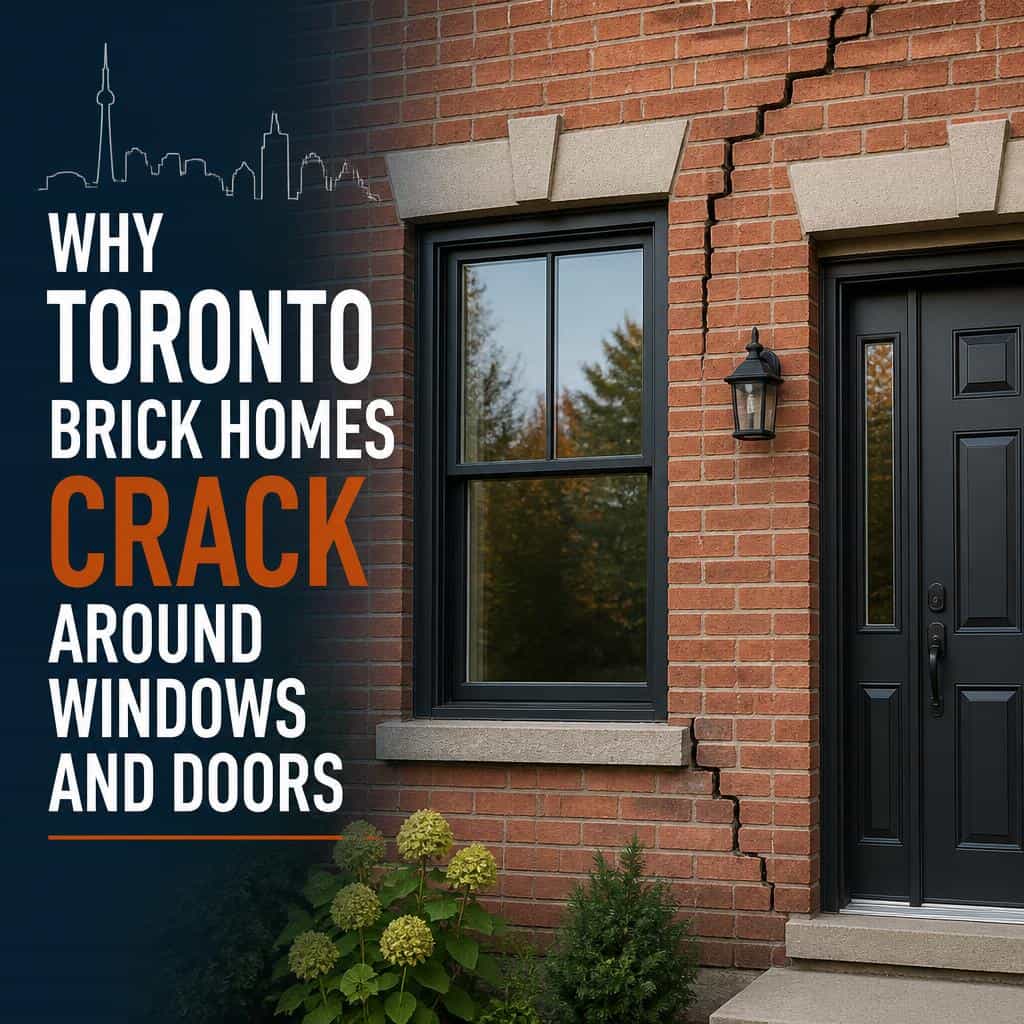
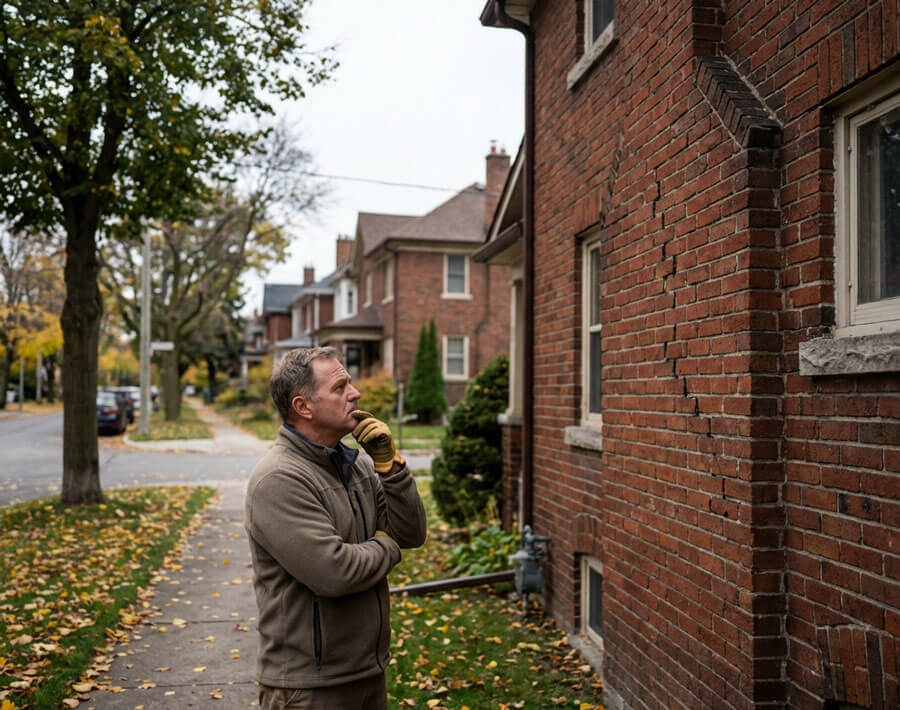
Small cracks happen, especially on older homes, and not every line in the mortar is an emergency. The danger comes when those hairline cracks grow longer, wider, or start branching.
Pay special attention to cracks at the corners of your home, above or below windows and doors, and where additions meet the original structure. If a crack is big enough to fit a coin into, or you can see it expanding season after season, it deserves a closer look from a professional.
2. Spalling Bricks (Flaking or Chipping Faces)
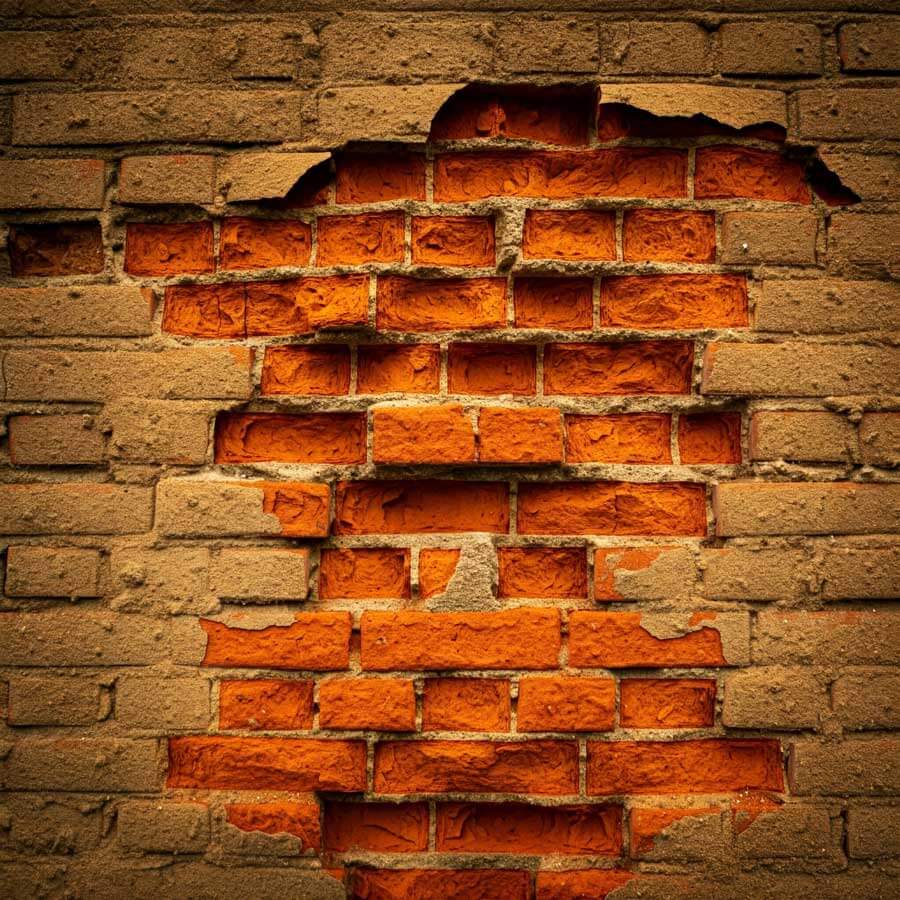
Spalling is what you see when the outer face of a brick starts to flake, chip, or pop off in thin layers. It often shows up as rough, pitted surfaces or bricks that look like their outer “skin” is peeling away.
This usually means moisture has gotten into the brick, and freeze–thaw cycles are slowly breaking it apart from the inside. A few spalled bricks caught early can often be replaced individually. If left alone, spalling can spread and weaken larger sections of wall or chimney.
3. Crumbling or Recessed Mortar Joints
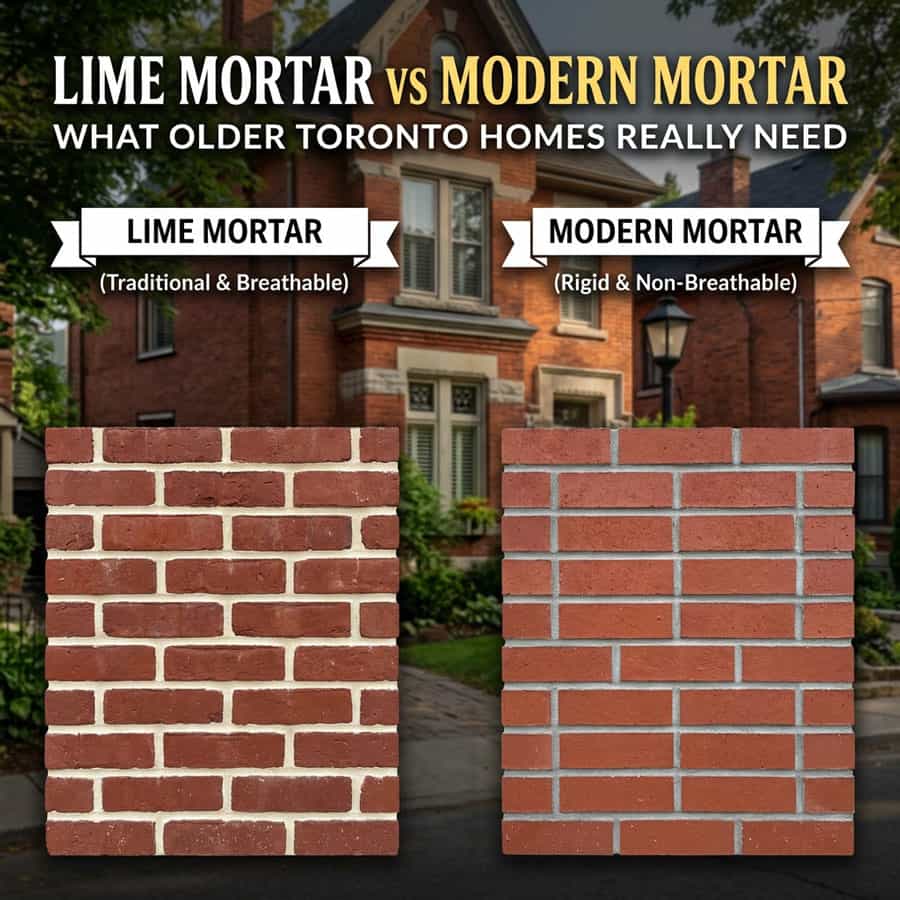
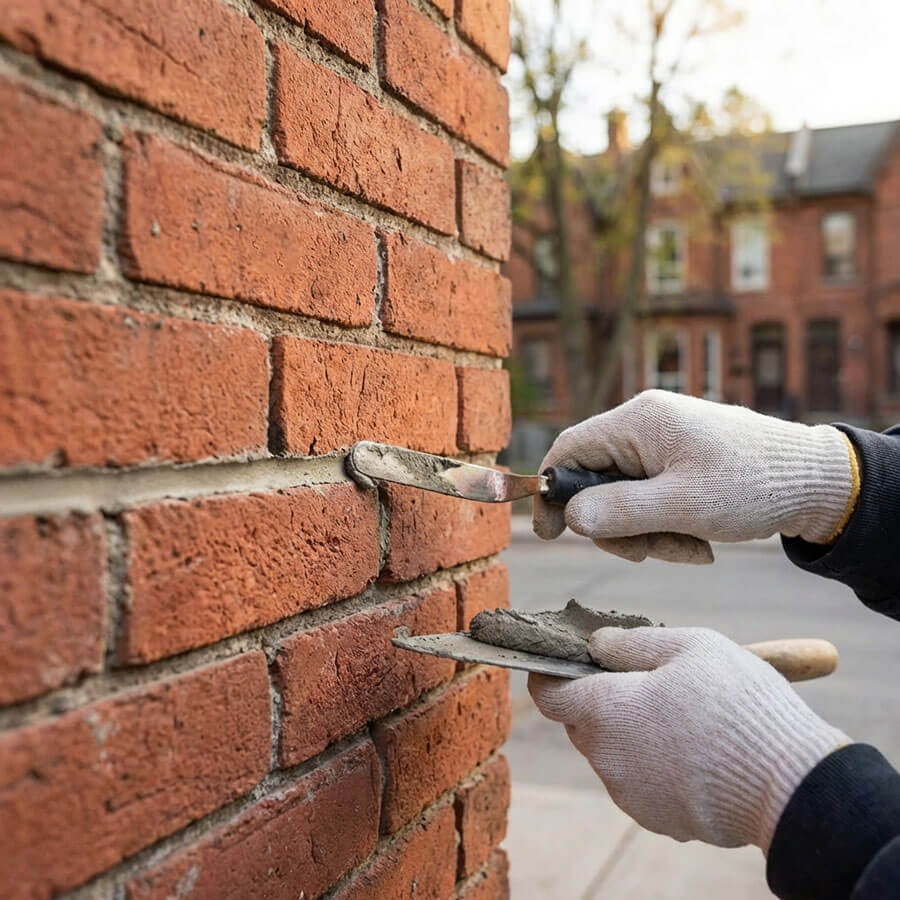
Mortar is the “glue” that bonds your bricks together and keeps water out. Over time, mortar can dry out, crumble, or wash away. You may notice joints that are sandy to the touch, deeply recessed compared to neighbouring joints, or missing in spots.
When mortar is no longer doing its job, more water gets into the wall. That speeds up freeze–thaw damage and can eventually affect the stability of the bricks themselves. Repointing (removing bad mortar and installing new mortar) at the right time can prevent much more serious structural issues.
4. White Powder on Brick (Efflorescence)
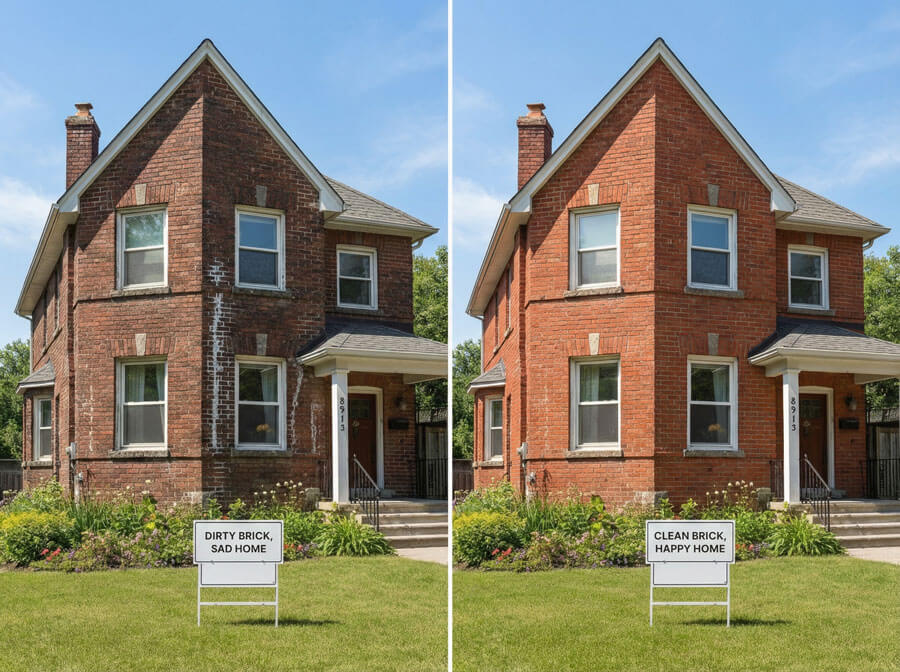
If you see a white, powdery substance on your brick, that is called efflorescence. It forms when water moves through the wall, dissolves salts in the masonry, and then evaporates on the surface, leaving the salts behind.
Efflorescence is not always a crisis, but it is a clear sign that moisture is passing through your brick or mortar. Occasional light deposits may be cosmetic, but heavy or recurring efflorescence often points to drainage, waterproofing, or leak issues that should be addressed.
5. Dark Stains, Rust Marks, or Water Streaks
Stains on or near masonry are sometimes more revealing than the brick itself. Look for dark streaks, rust marks, or discoloured patches on brick walls and chimneys.
Rust stains can suggest metal components are corroding behind the brick, such as lintels above windows or chimney components. Dark or damp‑looking areas after a rain can signal that water is soaking into certain spots instead of shedding off the surface.
6. Loose or Wobbly Bricks
If a brick moves when you press it, that is a clear warning sign. Bricks should feel solid and firmly locked in place. Loose bricks are often the result of failed mortar, ongoing water damage, or structural movement.
On a chimney, a few loose bricks are especially concerning, because they can fall and cause damage or injury. On walls, loose bricks can indicate a deeper problem that needs to be corrected before more of the wall is affected.
7. Leaning or Separating Chimney
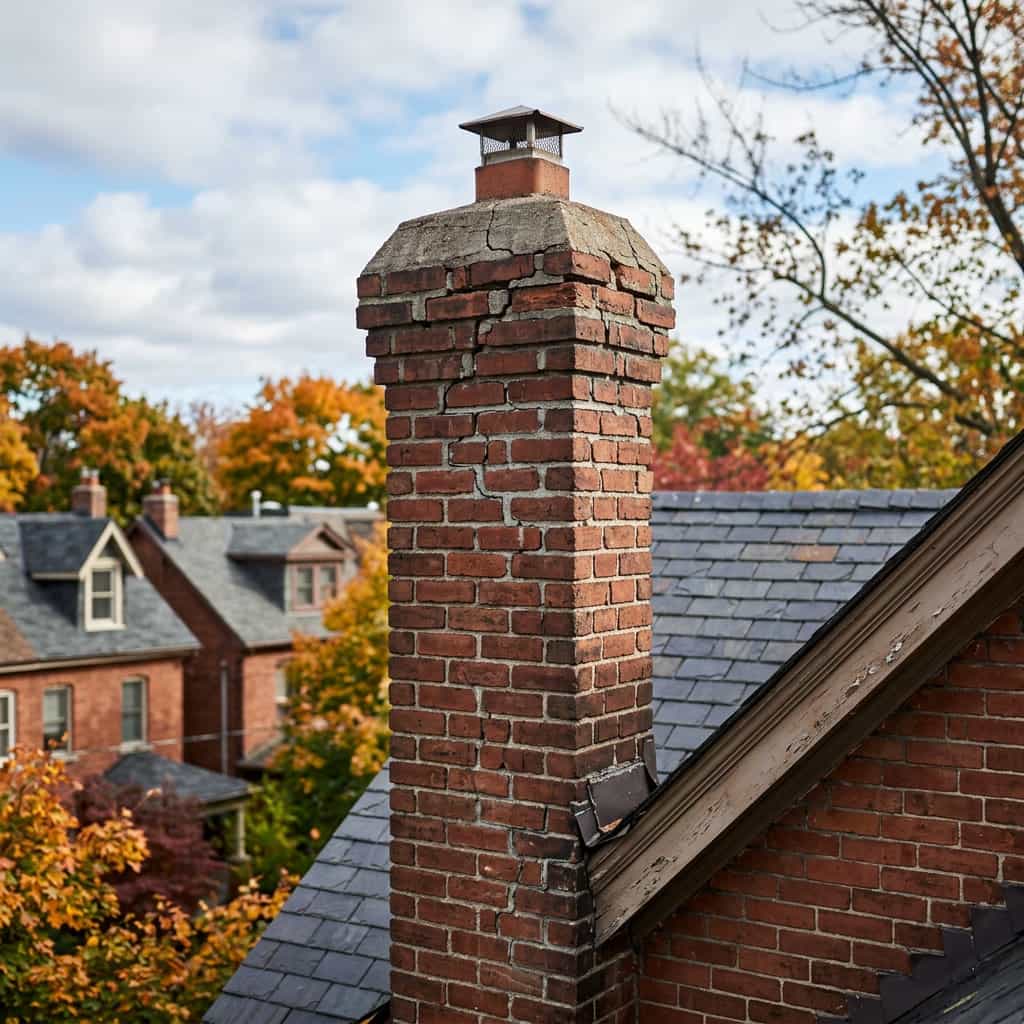
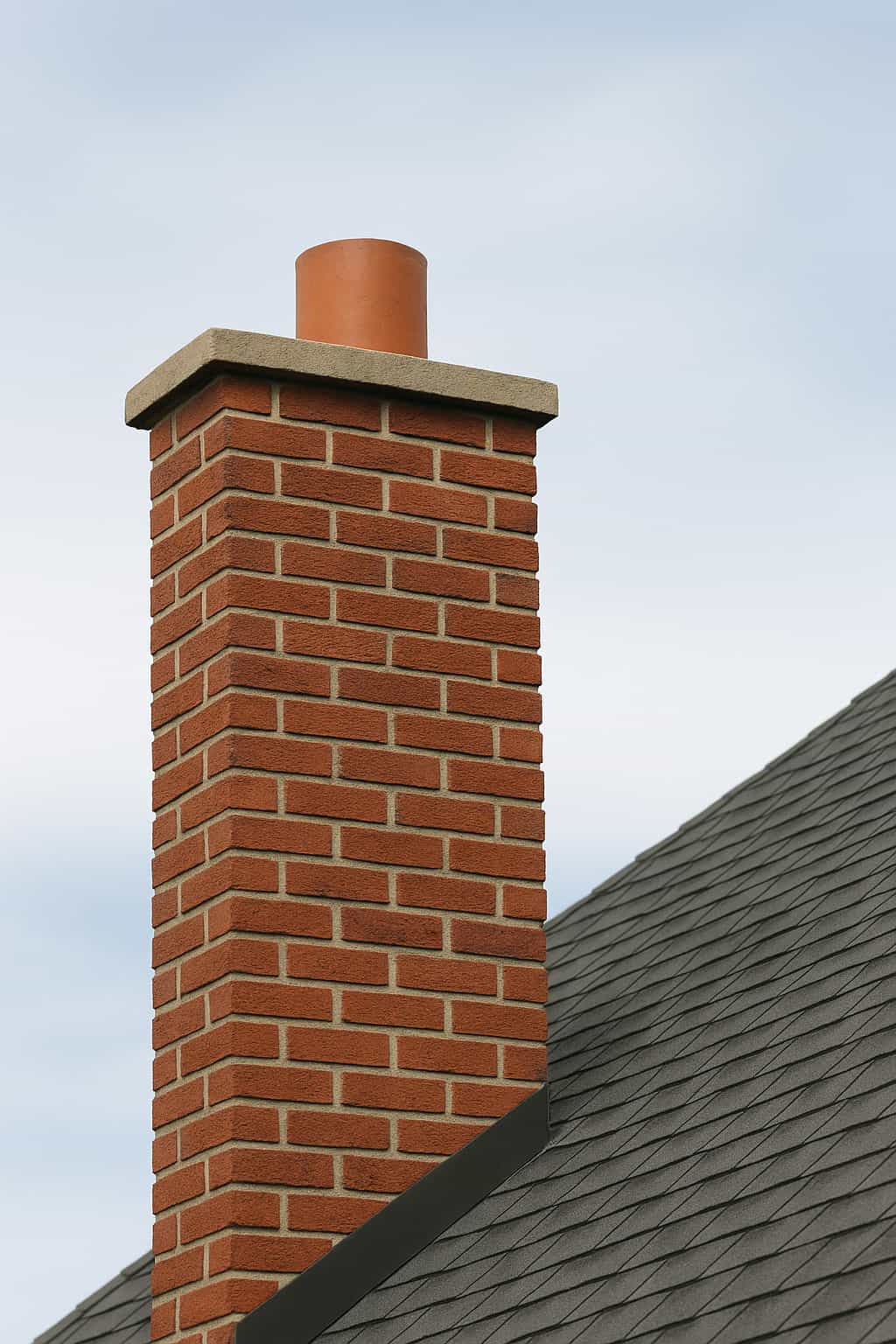
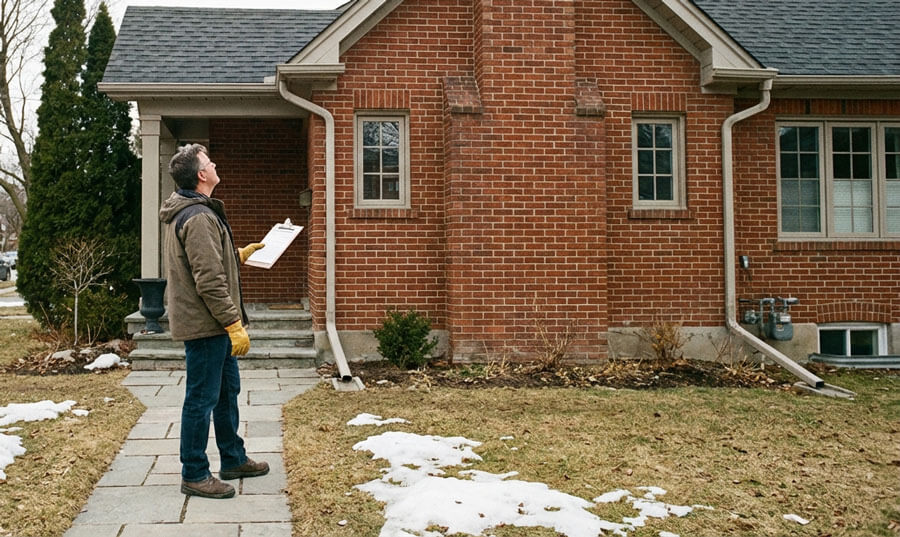
Take a step back from your home and look at your chimney from different angles. It should appear straight and firmly tied to the house. A chimney that leans, bows, or looks like it is pulling away from the wall is a serious red flag.
In some cases, this can be caused by foundation movement, deteriorated brickwork, or long‑term water damage. A leaning chimney is not something to ignore, because pieces can loosen over time and create real safety risks.
8. Cracked Chimney Crown or Missing Cap
The crown is the concrete or mortar surface at the very top of the chimney, and the cap is the cover that sits above the flue to help keep water and animals out. When the crown cracks, water can run directly into the chimney structure and the bricks below.
A missing or damaged cap allows rain and snow to go straight down the flue, increasing the risk of rust, interior damage, and freeze–thaw problems in the chimney itself. From the ground, you may be able to see obvious cracks in the crown or a visibly tilted or missing cap.
9. Interior Clues: Dampness, Stains, or Musty Smells
Not all masonry problems show up on the outside. Sometimes, the first signs appear indoors. Watch for damp patches, brownish water stains, peeling paint, or bubbling drywall on walls that back onto brick or chimney areas.
Musty smells, visible mould, or staining near your fireplace, chimney breast, or upper floor walls can indicate water is getting through the exterior masonry and into your home. These signs often mean it is time to look at both the interior and exterior to find the source.
10. Smoke, Draft, or Fireplace Problems
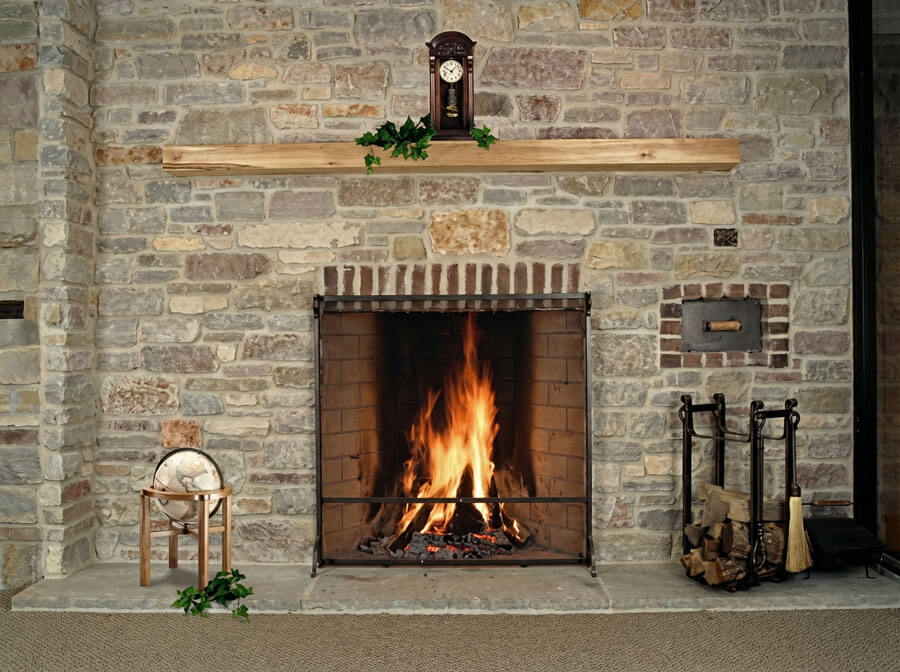
Changes in how your fireplace behaves can also point to masonry or chimney issues. Smoke spilling back into the room, a strong smoke smell, poor draft, or difficulty getting a fire to burn well can signal blockages, damage inside the flue, or problems with the chimney structure.
You might also notice rust in the firebox, around the damper, or on nearby metal components. Rust is a clue that water has been getting where it should not, which can be linked to a damaged crown, missing cap, or cracks higher up in the chimney.
When It Is Safe to Monitor vs When to Call a Pro
Not every small flaw means a major repair is needed right away, but there are some simple guidelines you can follow.
You can usually monitor when:
- A crack is thin, short, and has not changed in size over a season.
- Efflorescence appears lightly and only once, then can be brushed away.
- Mortar looks aged but is not deeply recessed or crumbling out in chunks.
You should contact a professional mason when:
- Cracks get longer or wider between one season and the next.
- You see multiple spalled bricks or a large area of missing or crumbling mortar.
- Any bricks are loose, wobbly, or falling.
- The chimney leans, looks separated from the house, or has obvious damage at the top.
- Interior walls near brick or chimney areas show repeated dampness, stains, or musty smells.
- Your fireplace shows signs of smoke problems, rust, or water inside.
Book a Professional Masonry or Chimney Inspection
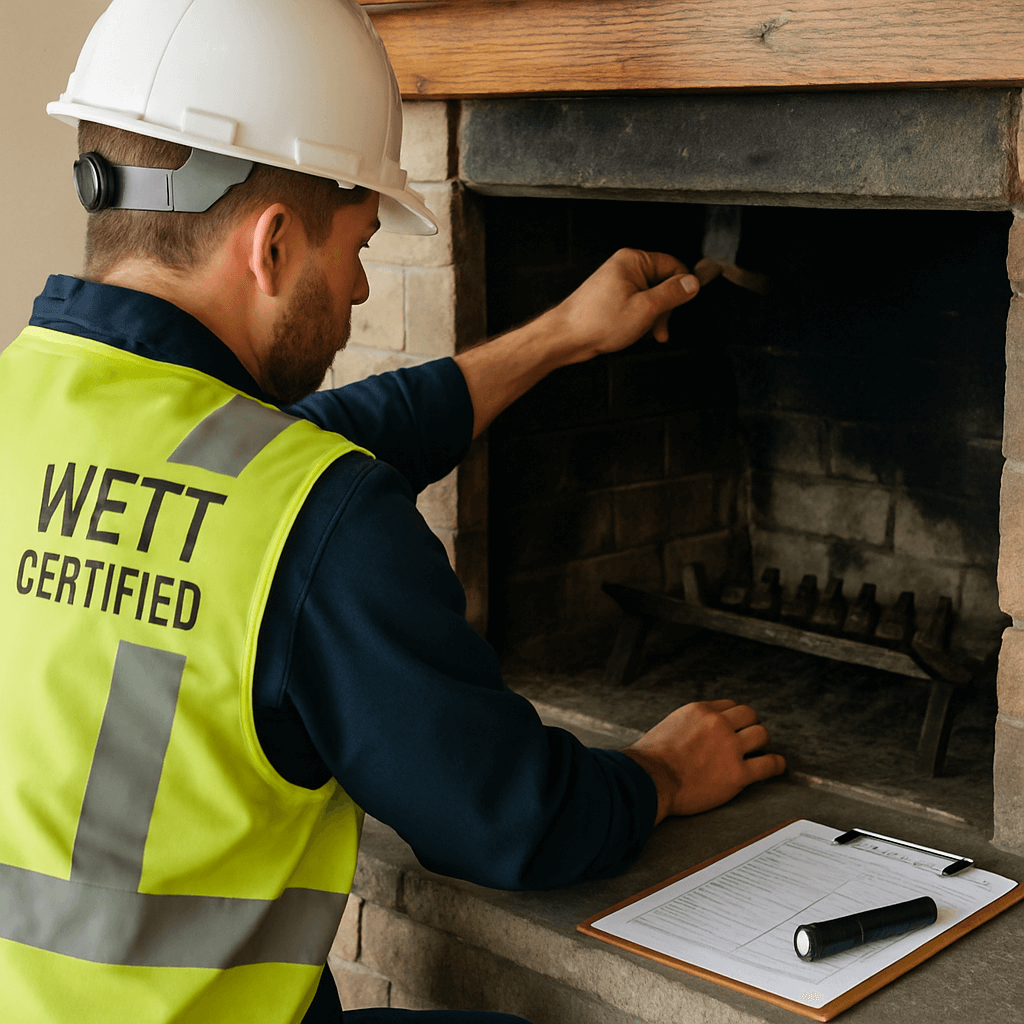
If you recognise any of these warning signs around your home, the safest next step is a professional inspection. A qualified mason can determine whether you are dealing with surface‑level wear or something deeper and recommend the right repair before the damage spreads.
Early attention to brick and chimney issues helps protect your home, your safety, and your budget. Instead of waiting for a visible crack to turn into a major failure, use these signs as a checklist and reach out for help as soon as something does not look or feel right.